Showing posts sorted by relevance for query death+penalty. Sort by date Show all posts

Friday, January 9, 2026

Pope Leo XIV on politics and the death penalty

From a couple of posts today at Twitter/X, commenting on Pope Leo’s address to the diplomatic corps at the Vatican:

A marvelous address by @Pontifex that condemns the pathologies of both the woke left and the jingoist right. Against the left, he denounces “the so-called ‘right to safe abortion,’” warns of “a subtle form of religious discrimination against Christians” by which they are “restricted in their ability to proclaim the truths of the Gospel for political or ideological reasons,” and decries “a new Orwellian-style language…which, in an attempt to be increasingly inclusive, ends up excluding those who do not conform to the ideologies that are fueling it.” Against the right, he warns of “excessive nationalism," affirms "the importance of international humanitarian law," and notes that “a diplomacy that promotes dialogue and seeks consensus among all parties is being replaced by a diplomacy based on force… peace is sought through weapons as a condition for asserting one’s own dominion." And he decries the fact that on every side of our political culture and social media, “language is becoming more and more a weapon with which to deceive, or to strike and offend opponents” rather than used “to express distinct and clear realities unequivocally.”

(From Twitter/X)

Sunday, October 27, 2024

Progressive Catholics and capital punishment

The debate over capital punishment between conservative and progressive Catholics typically exhibits the following dialectic.  The conservative will set out a case from natural law, scripture and tradition, and social science for the thesis that capital punishment is at least in principle licit and in practice still needed in some circumstances – as Joseph Bessette and I do at length in our book By Man Shall His Blood Be Shed.  The progressive will reply with an impassioned but vague appeal to human dignity, a cherry-picked statement from the recent magisterium, and a tendentious empirical claim (for example, that capital punishment does not deter, or is implemented in a racist manner), and top things off with in an ad hominem attack (such as accusing the conservative of being bloodthirsty or having a political motive).  The conservative will then complain that the progressive has attacked a straw man and simply ignored rather than answered his key points.  The progressive will at this point either ignore the conservative or simply repeat his original, question-begging reply at higher volume.

Friday, September 20, 2019

Fastiggi on the revision to the Catechism (Updated)


UPDATE: The conversation continues.  Prof. Fastiggi has responded to this post in the comments section over at Catholic World Report. I have cut and pasted his responses below, under the text of my original post, together with my replies.  Scroll down to take a look

In the comments section under my recent Catholic World Report article “Three questions for Catholic opponents of capital punishment,” theologian Prof. Robert Fastiggi raises a number of objections.  What follows is a reply.  Fastiggi’s objections are in bold, and I respond to them one by one.

Friday, October 10, 2025

Fastiggi and Sonna on Catholicism and capital punishment (Updated)

Recently, theologian Robert Fastiggi was interviewed about the topic of the Church and the death penalty by apologist Suan Sonna on his podcast Intellectual Catholicism.  Fastiggi’s views are the focus of the discussion, but Sonna, who largely agrees with him, adds some points of his own.  Their main concern in the discussion is to try to defend the changes Pope Francis made to the Church’s presentation of her teaching on the subject. 

I appreciate their civility, and Fastiggi’s call at the end of the interview for charity in dealing with those who disagree.  But their attempt fails.  Much of what Fastiggi has to say are reheated claims that I have already refuted in past exchanges with him, such as the two-part essay I wrote in response to his series on the death penalty at Where Peter Is.  (You can find it here and here.  The essay was reprinted as a single long article in Ultramontanism and Tradition, edited by Peter Kwasniewski.)  Fastiggi simply repeats his assertions without acknowledging, much less answering, my rebuttals.  He also makes some new claims, which are no more plausible than the older ones.  Let’s take a look.

Saturday, February 18, 2023

Pope Francis contra life imprisonment

The white supremacist Buffalo shooter who murdered ten people has been sentenced to life imprisonment without the possibility of parole.  According to scripture, natural law theory, and traditional Catholic moral theology alike, he is worthy of death.  It follows that this lesser penalty can hardly be unjust.  However, it seems that Pope Francis would disapprove of it.  For he has on many occasions condemned this sort of punishment as on a par with the death penalty, which he has also famously condemned.  I discussed this neglected but problematic aspect of the pope’s teaching in a Catholic World Report article originally published in 2019, and he has since then made further statements along the same lines.  Current events make the topic worth revisiting.

Wednesday, August 30, 2023

Fastiggi on Capital Punishment and the Change to the Catechism, Part II

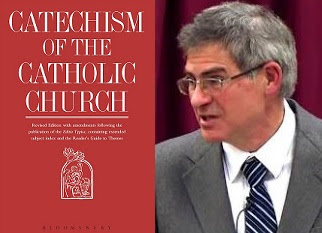
In 2018, Pope Francis authorized a revision of the Catechism of the Catholic Church, which now states that “the death penalty is inadmissible because it is an attack on the inviolability and dignity of the person.”  This might be read as implying that capital punishment is intrinsically wrong, which would contradict scripture and two thousand years of magisterial teaching.  As a result, the change has been criticized as at least badly formulated.  In a recent four-part series at Where Peter Is, theologian Robert Fastiggi criticizes the critics of the revision.  The first part of my response to Fastiggi addressed what he has to say about the obligations of Catholics vis-à-vis the Magisterium of the Church.  In this second part, I will address what he says about the teaching of scripture, the Fathers, and previous popes on the topic of capital punishment.

Thursday, April 11, 2024

Two problems with Dignitas Infinita

This week the Dicastery for the Doctrine of the Faith (DDF) published the Declaration Dignitas Infinita, on the topic of human dignity.  I am as weary as anyone of the circumstance that it has now become common for new documents issued by the Vatican to be met with fault-finding.  But if the faults really are there, then we oughtn’t to blame the messenger.  And this latest document exhibits two serious problems: one with its basic premise, and the other with some of the conclusions it draws from it.

Sunday, October 29, 2017

McClamrock on By Man shall His Blood Be Shed


At Today’s Catholic, David McClamrock reviews By Man Shall His Blood Be Shed: A Catholic Defense of Capital Punishment.  It’s a somewhat mixed review.  On the one hand, McClamrock acknowledges that:

The authors do make, and effectively support, many points worthy of serious consideration.  Among them, are in brief: Catholics are not required to favor the abolition of the death penalty.  The church has consistently taught that capital punishment is legitimate in principle, while often pleading for mercy in practice.  Death is a deserved and proportionate punishment for the worst murderers.  The credible prospect of the death penalty prevents crimes and saves lives... Numerous arguments for abolition of the death penalty are weak, ill-founded or even downright stupid

By exploding the view that extreme anti-death-penalty absolutism is the only authentically Catholic position, the work of Feser and Bessette may be helpful in recovering a well-balanced view of capital punishment.

Friday, November 16, 2018

The latest on Catholicism and capital punishment


At First Things, Joseph Bessette, Michael Pakaluk, and Fr. Brian Harrison comment on Steven Long’s recent article on capital punishment and the change to the catechism, and Long responds.

Parkland shooter suspect Nikolas Cruz has assaulted a prison guard, illustrating the continuing danger murderers pose even after incarceration.

In the October 2018 issue of the magazine New Directions, Fr. Richard Norman reviews By Man Shall His Blood Be Shed: A Catholic Defense of Capital Punishment.  Fr. Norman says that he is “prudentially opposed” to the death penalty, yet still judges that:

Thursday, November 2, 2017

Smith on By Man Shall His Blood Be Shed


In the Fall 2017 issue of the Claremont Review of Books, Catholic moral theologian Janet Smith reviews By Man Shall His Blood Be Shed: A Catholic Defense of Capital Punishment.  Writes Smith:

[T]he central argument of [the book is] that some crimes deserve death, and that this is now and has always been the teaching of the Catholic Church.  Anyone who would claim otherwise must contend with Edward Feser and Joseph Bessette’s unparalleled – and I’m tempted to say, irrefutable – marshalling of evidence and logic in this important new book.

Saturday, April 29, 2023

The Catechism and Capital Punishment: A Reply to Annett

Some years back, in my article “Three questions for Catholic opponents of capital punishment,” I argued that Pope Francis’s statements on the death penalty cannot plausibly be read in a way that would make assent to them binding on Catholics.  This week, in an article at Where Peter Is, Tony Annett offers a reply.  Let’s take a look.

Wednesday, May 17, 2023

Capital punishment and the law of nations

What is the nature of Pope Francis’s 2018 change to the Catechism’s teaching on capital punishment?  Does it amount to a reversal of traditional teaching?  A development of doctrine that is consistent with that teaching?  A prudential judgment?  And if the latter, is assent to the new formulation binding on the faithful?  Barrett Turner offers an important analysis in his Nova et Vetera article “Pope Francis and the Death Penalty: A Conditional Advance of Justice in the Law of Nations.”  Let’s take a look.

Wednesday, August 6, 2025

Newman on capital punishment

It was announced last week that Pope Leo XIV will be declaring St. John Henry Newman to be a Doctor of the Church.  As the Catholic Encyclopedia notes, the Church proclaims someone to be a Doctor on account of “eminent learning” and “a high degree of sanctity.”  This combination makes a Doctor an exemplary guide to matters of faith and morals.  To be sure, the Doctors are not infallible.  Their authority is not as great as that of scripture, the consensus of the Church Fathers, or the definitive statements of the Church’s magisterium.  All the same, their authority is considerable.  As Aquinas notes, appeal to the authority of the Doctors of the Church is “one that may properly be used” in addressing doctrinal questions, even if such an appeal by itself yields “probable” conclusions rather than incontrovertible ones (Summa Theologiae I.1.8).

Friday, September 23, 2016

A further reply to Mark Shea


At Catholic World Report, Mark Brumley comments on my exchange with Mark Shea concerning Catholicism and capital punishment.  Brumley hopes that “charity and clarity” will prevail in the contemporary debate on this subject.  I couldn’t agree more.  Unfortunately, you’ll find only a little charity, and no clarity, in Shea’s latest contribution to the discussion.  Shea labels his post a “reply” to what I recently wrote about him but in fact he completely ignores the points I made and instead persists in attacking straw men, begging the question, and raising issues that are completely irrelevant to the dispute between us.

Wednesday, March 30, 2011

Catholicism, conservatism, and capital punishment

Catholic teaching on the death penalty – or rather, yet another simplistic and misleading presentation of the Church’s teaching – is in the news again.  I plan to write up a blog post on this latest controversy, but in the meantime I thought it would be worthwhile reprinting the lengthy treatment of the subject I wrote for the old Right Reason group blog back in 2005.  (The original post and the combox discussion it generated can still be found here via the Wayback Machine.  But Wayback Machine links are temperamental, so it will be useful to give the post a new home.)

Tuesday, May 23, 2017

Peters on By Man Shall His Blood Be Shed


By Man Shall His Blood Be Shed: A Catholic Defense of Capital Punishment, which I co-authored with political scientist Joseph Bessette, is now available.  Edward Peters, Professor of Canon Law at Sacred Heart Major Seminary, comments today at Facebook:

Since I first saw it in galley form several months ago I have been impatiently awaiting the [book’s] publication… Well, my copy just arrived in the mail.

Defenders of the death penalty for certain heinous offenses need no encouragement from me to study this book, of course, but, from now on, opponents of the death penalty who do not address the arguments set out by Feser & Bessette really have nothing useful to contribute to the debate.

Thursday, January 5, 2017

COMING SOON: By Man Shall His Blood Be Shed


I am pleased to announce the forthcoming publication by Ignatius Press of By Man Shall His Blood Be Shed: A Catholic Defense of the Death Penalty, which I have co-authored with Prof. Joseph Bessette of Claremont McKenna College.  You can order it from Amazon or directly from Ignatius

From the promotional materials:

Saturday, June 15, 2019

The bishops and capital punishment


A group of five prelates comprising Cardinal Raymond Burke, Bishop Athanasius Schneider, Cardinal Janis Pujats, Archbishop Tomash Peta, and Archbishop Jan Pawel Lenga this week issued a “Declaration of the truths relating to some of the most common errors in the life of the Church of our time.”  Among the many perennial Catholic doctrines that are now commonly challenged but are reaffirmed in the document is the following:

In accordance with Holy Scripture and the constant tradition of the ordinary and universal Magisterium, the Church did not err in teaching that the civil power may lawfully exercise capital punishment on malefactors where this is truly necessary to preserve the existence or just order of societies (see Gen 9:6; John 19:11; Rom 13:1-7; Innocent III, Professio fidei Waldensibus praescripta; Roman Catechism of the Council of Trent, p. III, 5, n. 4; Pius XII, Address to Catholic jurists on December 5, 1954).

Sunday, September 22, 2024

The popesplainer’s safety dance

Pope Francis recently added yet another item to the long list of doctrinally problematic statements he has issued through the course of his pontificate.  Commenting on the plurality of religions during a speech at the Catholic Junior College in Singapore, he said:

If you start arguing, “My religion is more important than yours,” or “Mine is the true one, yours is not true,” where does this lead?  Somebody answer.  [A young person answers, “Destruction”.]  That is correct.  All religions are paths to God.  I will use an analogy, they are like different languages that express the divine.  But God is for everyone, and therefore, we are all God’s children.  “But my God is more important than yours!”  Is this true?  There is only one God, and religions are like languages, paths to reach God.  Some Sikh, some Muslim, some Hindu, some Christian.

As the article from which I quote this passage notes, while the Vatican’s initial English translation of the pope’s words attempted to sanitize them, it was later corrected to make it clear that this is indeed what the pope said.  And what he said flatly contradicts traditional Catholic teaching.  Francis criticizes those who take one religion to be the true or most important one, and implies that Christianity, Islam, Hinduism, Sikhism, etc. are as equal as different languages are. 

Tuesday, June 11, 2019

Augustine on capital punishment


In his book On Augustine: The Two Cities, Alan Ryan says that Augustine’s “understanding of the purpose of punishment made the death penalty simply wrong” (p. 82).  That is a bit of an overstatement.  In The City of God, Augustine writes:

However, there are some exceptions made by the divine authority to its own law, that men may not be put to death.  These exceptions are of two kinds, being justified either by a general law, or by a special commission granted for a time to some individual.  And in this latter case, he to whom authority is delegated, and who is but the sword in the hand of him who uses it, is not himself responsible for the death he deals.  And, accordingly, they who have waged war in obedience to the divine command, or in conformity with His laws, have represented in their persons the public justice or the wisdom of government, and in this capacity have put to death wicked men; such persons have by no means violated the commandment, “You shall not kill.” (Book I, Chapter 21)