Showing posts sorted by relevance for query Pope Honorius. Sort by date Show all posts

Tuesday, October 4, 2022

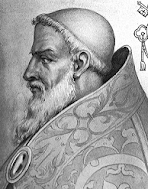
The error and condemnation of Pope Honorius

A pope is said to speak ex cathedra or “from the chair” when he solemnly puts forward some teaching in a manner intended to be definitive and absolutely binding.  This is also known as an exercise of the pope’s extraordinary magisterium, and its point is to settle once and for all disputed matters concerning faith or morals.  The First Vatican Council taught that such ex cathedra doctrinal definitions are infallible and thus irreformable.  The ordinary magisterium of the Church too (whether in the person of the pope or some other bishop or body of bishops) can sometimes teach infallibly, when it simply reiterates some doctrine that has always and everywhere been taught. 

The Church does not hold, however, that popes always teach infallibly when not speaking ex cathedra.  The First Vatican Council deliberately stopped short of making that claim.  One reason for this is that there have been a few popes (though only a few) who erred when not exercising their extraordinary magisterium.  The most spectacular case is that of Pope Honorius I (pope from 625-638 A.D.), who taught a Christological error that facilitated the spread of the Monothelite heresy, and was formally condemned for it by several Church councils and later popes. 

Thursday, October 6, 2022

Can Pope Honorius be defended?

My recent article on the error and condemnation of Pope Honorius has gotten a lot of feedback both here and at Twitter (much of the latter surprisingly civil and constructive for that venue).  Because of the historical and theological complexities of the topic, several issues have arisen, but the main one I want to address here is the question of whether Honorius can plausibly be defended from the charge of heresy that the Sixth Ecumenical Council leveled against him.  Keep in mind that what is at issue here is not whether Honorius taught heresy while issuing a purported ex cathedra definition.  He was certainly not doing that, which is why the case of Honorius is irrelevant to whether popes are infallible when they do teach ex cathedra (which is all that the First Vatican Council taught in its decree on papal infallibility).  What is at issue is whether Honorius taught heresy when not speaking ex cathedra – and, more generally, whether any pope could in principle do so.

Sunday, September 22, 2024

The popesplainer’s safety dance

Pope Francis recently added yet another item to the long list of doctrinally problematic statements he has issued through the course of his pontificate.  Commenting on the plurality of religions during a speech at the Catholic Junior College in Singapore, he said:

If you start arguing, “My religion is more important than yours,” or “Mine is the true one, yours is not true,” where does this lead?  Somebody answer.  [A young person answers, “Destruction”.]  That is correct.  All religions are paths to God.  I will use an analogy, they are like different languages that express the divine.  But God is for everyone, and therefore, we are all God’s children.  “But my God is more important than yours!”  Is this true?  There is only one God, and religions are like languages, paths to reach God.  Some Sikh, some Muslim, some Hindu, some Christian.

As the article from which I quote this passage notes, while the Vatican’s initial English translation of the pope’s words attempted to sanitize them, it was later corrected to make it clear that this is indeed what the pope said.  And what he said flatly contradicts traditional Catholic teaching.  Francis criticizes those who take one religion to be the true or most important one, and implies that Christianity, Islam, Hinduism, Sikhism, etc. are as equal as different languages are. 

Sunday, December 18, 2016

Denial flows into the Tiber


Pope Honorius I occupied the chair of Peter from 625-638.  As the 1910 Catholic Encyclopedia notes in its article on Honorius, his chief claim to fame is that “he was condemned as a heretic by the sixth general council” in the year 680.  The heresy in question was Monothelitism, which (as the Encyclopedia notes) was “propagated within the Catholic Church in order to conciliate the Monophysites, in hopes of reunion.”  That is to say, the novel heresy was the byproduct of a misguided attempt to meet halfway, and thereby integrate into the Church, an earlier group of heretics.  The condemnation of Pope Honorius by the council was not the end of the matter.  Honorius was also condemned by his successors Pope St. Agatho and Pope St. Leo II.  Leo declared:

We anathematize the inventors of the new error… and also Honorius, who did not attempt to sanctify this Apostolic Church with the teaching of Apostolic tradition, but by profane treachery permitted its purity to be polluted.

Monday, May 6, 2019

Some comments on the open letter


What should we think of the recent open letter accusing Pope Francis of heresy, signed by Fr. Aidan Nichols, Prof. John Rist, and other priests and academics (and for which Prof. Josef Seifert has now expressed his support)?  Like others who have commented on it, I think the letter overstates things in its main charge and makes some bad arguments, but that it also makes many correct and important points that cannot reasonably be dismissed merely because the letter is seriously deficient in other respects. 

Saturday, December 17, 2022

When do popes teach infallibly?

It is well-known that the Catholic Church teaches that popes are infallible when they speak ex cathedra or exercise their extraordinary magisterium.  What that means is that if a pope formally presents some teaching in a manner intended to be definitive and absolutely binding, he is prevented by divine assistance from falling into error.  The ordinary magisterium of the Church, and the pope when exercising it, are also infallible when they simply reiterate some doctrine that has been consistently taught for centuries.  (Elsewhere, I’ve discussed the criteria for determining whether some such doctrine has been taught infallibly.)  Even when papal teaching on faith and morals is not presented in a definitive and absolutely binding way, assent is normally required of Catholics.  (The rare exceptions are something I’ve also addressed elsewhere.)

Saturday, November 21, 2015

Papal fallibility (Updated)


Catholic doctrine on the teaching authority of the pope is pretty clear, but lots of people badly misunderstand it.  A non-Catholic friend of mine recently asked me whether the pope could in theory reverse the Church’s teaching about homosexuality.  Said my friend: “He could just make an ex cathedra declaration to that effect, couldn’t he?”  Well, no, he couldn’t.  That is simply not at all how it works.  Some people think that Catholic teaching is that a pope is infallible not only when making ex cathedra declarations, but in everything he does and says.  That is also simply not the case.  Catholic doctrine allows that popes can make grave mistakes, even mistakes that touch on doctrinal matters in certain ways.

Tuesday, March 5, 2024

When do popes speak ex cathedra?

Consider four groups that, one might think, couldn’t be more different: Pope Francis’s most zealous defenders; sedevacantists; Protestants; and Catholics who have recently left the Church (for Eastern Orthodoxy, say).  Something at least many of them have in common is a serious misunderstanding of the Catholic doctrine of papal infallibility – one which has led them to draw fallacious conclusions from recent papal teaching that seems to conflict with traditional Catholic doctrine (for example, on Holy Communion for those in invalid marriages, the death penalty, and blessings for same-sex couples).  Some of Pope Francis’s defenders insist that, since these teachings came from a pope, they must therefore be consistent with traditional doctrine, appearances notwithstanding.  Sedevacantists argue instead that, given that these teachings are not consistent with traditional doctrine, Francis must not be a true pope.  Some Protestants, meanwhile, argue that since Francis is a true pope but the teachings in question are (they judge) not consistent with traditional Christian doctrine, Catholic claims about papal infallibility have been falsified.  Finally, some Catholics have concluded the same thing, and left the Church as a result.

Monday, November 4, 2019

The strange case of Pope Vigilius


The increasingly strange pontificate of Pope Francis is leading many Catholics into increasingly strange behavior.  Some, like the emperor’s sycophants in the Hans Christian Anderson story, insist with ever greater shrillness that nothing Pope Francis does is ever really in the least bit problematic.  If your eyes seem plainly to be telling you otherwise, then it is, they insist, your lying eyes that are the problem.  Others, incapable of such self-deception, are driven into a panic by the pope’s manifestly problematic words and actions.  They overreact, either beating a retreat into sedevacantism or judging that the claims of Catholicism have been proven false and that the only recourse is Eastern Orthodoxy.

Wednesday, July 30, 2025

Suffering for the truth (Updated)

As many readers will have heard by now, last week Detroit’s new archbishop Edward Weisenburger suddenly fired three well-known professors at Sacred Heart Major Seminary: theologians Ralph Martin and Eduardo Echeverria and canon lawyer Edward Peters.  No official explanation has been given.  Martin has said that he was told only and vaguely that it had to do with “concerns about [his] theological perspectives.”  Echeverria has declined comment because of a non-disclosure agreement.  Peters says that he has “retained counsel.”

Sunday, May 20, 2018

The Church permits criticism of popes under certain circumstances


Fathers have the authority to teach and discipline their children, but this authority is not absolute.  They may not teach their children to do evil, and they may not discipline them with unjust harshness.  Everyone knows this, though everyone also knows that there are fathers who do in fact abuse their children or teach them to do evil.  Everyone also knows that it is right for children under these unhappy circumstances to disobey and reprove their fathers, while still acknowledging their fathers’ authority in general and submitting to his lawful instructions.

Saturday, February 18, 2023

Pope Francis contra life imprisonment

The white supremacist Buffalo shooter who murdered ten people has been sentenced to life imprisonment without the possibility of parole.  According to scripture, natural law theory, and traditional Catholic moral theology alike, he is worthy of death.  It follows that this lesser penalty can hardly be unjust.  However, it seems that Pope Francis would disapprove of it.  For he has on many occasions condemned this sort of punishment as on a par with the death penalty, which he has also famously condemned.  I discussed this neglected but problematic aspect of the pope’s teaching in a Catholic World Report article originally published in 2019, and he has since then made further statements along the same lines.  Current events make the topic worth revisiting.

Friday, December 9, 2016

Hiroshima, mon Amoris? (Updated 12/16)


Pope Francis’s Amoris Laetitia has been something of a bombshell.  And its critics worry that it will have something like a bombshell’s effect on the Church.  Most readers are no doubt aware of the four cardinals’ now famous dubia (“doubts”), requesting from the pope clarification on certain doctrinal questions raised by the document.  This was preceded earlier this year by a statement from forty-five theologians and clergy asking the pope to repudiate theological errors they take to be apparent in the document.

Saturday, May 25, 2019

Popes, heresy, and papal heresy


In an interview at National Catholic Register, philosopher John Rist defends his decision to sign the open letter accusing Pope Francis of heresy (on which I commented in an earlier post).  At Catholic Herald, canon lawyer Ed Peters argues that the letter fails to establish its main charge.  Properly to understand this controversy, it is important to see that a reasonable person could judge that both men have a point – as long as we disambiguate the word “heresy.”

Wednesday, September 5, 2018

Why Archbishop Viganò is almost certainly telling the truth


There are five considerations that seem to me to make it very likely that Archbishop Viganò’s testimony is truthful.  To be sure, given how numerous and detailed are the claims he makes, it would not be surprising if he has gotten certain particulars wrong.  And perhaps in his passion he has inadvertently overstated things here and there.  But the main claims are probably true.  I certainly do not believe he is lying.  The reasons are these:

Sunday, February 25, 2024

What counts as magisterial teaching?

Popes speak infallibly when they either proclaim some doctrine ex cathedra, or reiterate some doctrine that has already been taught infallibly by virtue of being a consistent teaching of the ordinary magisterium of the Church for millennia.  Even when papal teaching is not infallible, it is normally owed “religious assent.”  However, the Church recognizes exceptions.  The instruction Donum Veritatis, issued during the pontificate of St. John Paul II, acknowledges that “it could happen that some Magisterial documents might not be free from all deficiencies” so that “a theologian may, according to the case, raise questions regarding the timeliness, the form, or even the contents of magisterial interventions.”  Donum Veritatis explicitly distinguishes such respectful criticism from “dissent” from perennial Church teaching.

Saturday, August 26, 2023

Fastiggi on Capital Punishment and the Change to the Catechism, Part I

In 2018, Pope Francis revised the section of the Catechism of the Catholic Church dealing with the topic of capital punishment, so that it now states that “the death penalty is inadmissible because it is an attack on the inviolability and dignity of the person.”  Flatly to assert that capital punishment is “an attack on the inviolability and dignity of the person” might be read as implying that the death penalty is intrinsically evil, or immoral of its very nature and not just under the wrong circumstances.  Such a claim would contradict scripture and two millennia of consistent magisterial teaching.  For this reason, the revision has been criticized as at least badly formulated, even by some Catholic thinkers who support the abolition of capital punishment.  For example, after the revision was announced, an appeal was made by forty-five prominent Catholic academics and clergy to the cardinals of the Catholic Church to call upon the pope clearly to reaffirm traditional teaching on the subject.

Tuesday, April 12, 2022

Benevacantism is scandalous and pointless

In his book The Plato Cult and Other Philosophical Follies, David Stove observes that an argument once given by philosopher of science Imré Lakatos “manages to be scandalous and pointless at the same time” (p. 8).  He was referring to Lakatos’s having made use of certain historical examples, some of the details of which Lakatos admitted he had made up himself.  The idea is that, as bad as dishonest scholarship is, worse still is defeating the whole purpose by admitting that that is what you are doing.  I put aside for present purposes the question of whether Stove’s characterization of Lakatos was actually fair.  What I’m interested in here is the general idea of a position that is simultaneously scandalous and pointless.

Sunday, November 10, 2019

Two popes and idolatry


How bad can a bad pope get?  Pretty bad.  Here are two further examples from history.  Marcellinus was pope from c. 296 – 304.  During his pontificate, Emperor Diocletian initiated a persecution of the Christians, requiring the surrender of sacred texts and the offering of incense to the Roman gods.  Marcellinus and some of his clergy apparently complied, though Marcellinus is also said to have repented of this after a few days and to have suffered martyrdom as a result.  Some claim that by virtue of his compliance he was guilty of a formal apostasy that resulted in loss of the papal office, though his purported repentance and martyrdom also led to his veneration and recognition as a saint.

Sunday, July 18, 2021

Pope Victor redux?

The Quartodeciman controversy of the second century A.D. had to do with the date on which the resurrection of Christ ought to be observed.  Churches in Asia Minor preserved the custom of tying this observance to the date of the Passover, whatever day of the week that happened to fall on.  The Roman practice was instead to observe it on a Sunday, since that was the day Christ was resurrected.  The eastern practice was defended by St. Polycarp, who appealed to the authority of none other than his teacher St. John the Apostle.  Pope St. Anicetus tried unsuccessfully to convince Polycarp to adopt the Roman practice, and they agreed to disagree.