And now, dear reader, our critical look at Alex Rosenberg’s The Atheist’s Guide to Reality brings us to the pseudoscience du jour. Wittgenstein famously said that “in psychology there are experimental methods and conceptual confusion” (Philosophical Investigations, II, xiv, p. 232). He might as well have been talking about contemporary neuroscience -- or, more precisely, about how neuroscience becomes distorted in the hands of those rich in empirical data but poor in philosophical understanding. Every week seems to bring some new sensationalistic claim to the effect that neuroscience has “shown” this or that -- that free will is an illusion, or that mindreading is possible, or that consciousness plays no role in human action -- supported by arguments notable only for the crudeness of the fallacies they commit.
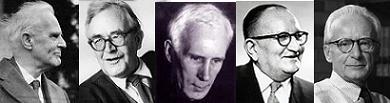
Tyler Burge has given the label “neurobabble” to this modern intellectual pathology, and Raymond Tallis calls it “neurotrash,” born of “neuromania.” I’ve had reason to comment on it in earlier posts (here and here) and an extreme manifestation of the disease is criticized in the last chapter of The Last Superstition. M. R. Bennett and P. M. S. Hacker subject neurobabble to detailed and devastating criticism in their book Philosophical Foundations of Neuroscience, and Tallis does a bit of housecleaning of his own in Aping Mankind. Neurobabble is a key ingredient in Rosenberg’s scientism. Like so many other contemporary secularists, he has got the brain absolutely on the brain, and maintains that modern neuroscience vindicates some of his more outrageous metaphysical claims. In particular, he thinks that so-called “blindsight” phenomena establish that consciousness is irrelevant to our actions, and that neuroscientist Benjamin Libet’s experiments cast doubt on free will. (Jerry Coyne, in a recent article, has made similar claims about free will. What I’ll say about Rosenberg applies to Coyne as well.)