Monday, July 20, 2009

Hitting the metaphysical snooze button

One of the major themes of The Last Superstition is the significance of the early modern philosophers’ replacement of the classical teleological conception of nature with an anti-teleological or mechanistic conception. Another major theme is how utterly oblivious most contemporary intellectuals are to the nature and consequences of this revolution – about the motivations that lay behind it, its true relationship to modern science, the surprising feebleness of the arguments used to justify it, and the new and intractable problems it opened up. Most of all, they show little awareness of the deep conceptual problems inherent in the attempt to give a thoroughly mechanistic account of the world, as contemporary naturalism seeks to do. (I argue in the book that the very program is incoherent, so that naturalism, as usually understood anyway, is demonstrably false. I also provide positive arguments to show that a teleological conception of nature is rationally unavoidable – as are the theism and natural law conception of morality that the Aristotelian-Thomistic tradition derives from it.)

What is remarkable is how, just over a half-century ago, the problematic character of the modern mechanistic understanding of nature was as evident to many prominent intellectuals as it is utterly invisible to their descendants. Nor am I referring merely to Neo-Scholastics and other Thomists. In the book I quote a lengthy passage from the September 1948 Atlantic Monthly in which the then-prominent empiricist philosopher W. T. Stace – not someone with a religious or Aristotelian ax to grind – described the early moderns’ replacement of a teleological conception of the world with a mechanistic one as “the greatest revolution in human history, far outweighing in importance any of the political revolutions whose thunder has reverberated through the world,” and one which in his view necessarily undermined the foundations of morality. Moreover, he realized that this revolution was purely philosophical in character, not scientific, despite its often being conflated with (and thereby deriving an unearned prestige from) the discoveries of early modern science.

Stace thought the meaninglessness of human existence entailed by this picture of the world was something we would have to try to learn to live with. (Good luck with that.) But other thinkers of the day saw that the problems with the mechanistic conception of nature went well beyond its unhappy moral implications. They saw that it was philosophically inadequate, that it simply did not do justice to what we know about the world – indeed, to what we know about the world in part through modern science itself. They often also saw that the criticisms the early moderns had made of their medieval predecessors were superficial and unfair – and again, I’m speaking of non-Aristotelian and non-Thomistic writers here, not those with a Scholastic or Catholic stake in the controversy.

Take, for example, Alfred North Whitehead. In Science and the Modern World, based on his 1925 Lowell Lectures, he judges that the mathematical-cum-mechanistic conception of the natural world, for all its undoubted practical benefits in allowing for the prediction and control of events, is as a metaphysical theory “quite unbelievable,” the outcome of mistaking “high abstractions” for “concrete realities” (pp. 54-55). Groundlessly treating the idealizations of quantitative empirical science as if they constituted an exhaustive description of the natural order has generated an endless “oscillation” of modern philosophy between the three equally unacceptable extremes of Cartesian dualism, materialism, and idealism, as philosophers hopelessly try to make sense of the place of mind in a mechanistic world (p. 55).

Confusing the abstract and concrete is only half the problem, though, in Whitehead’s view. The other half is the difficulty the anti-teleological mechanistic revolution opened up for the understanding of causation and inductive reasoning. As I discuss at length in TLS, for the Scholastics, the main way in which final causality manifests itself in the natural world is as the concomitant of efficient causality. If some cause A regularly generates some effect or range of effects B – if fire regularly generates heat, ice cubes regularly cause the surrounding air or water to grow cooler, and so forth – this can only be because there is something in the nature of A by virtue of which it “points to” or “aims at” B specifically, as to a goal or natural end. If there is no such “pointing” or “aiming” in A – that is to say, if the generation of B is not the final cause of A – then the fact that A is an efficient cause of B, the fact that it reliably generates B specifically rather than C, D, E, or no effect at all, becomes unintelligible. This is, from an Aristotelian-Thomistic point of view, precisely why efficient causation became so problematic in modern philosophy: the denial of formal and final causes (i.e. the denial that things have natures in virtue of which they are directed toward certain ends) was bound to result in the skeptical puzzles of David Hume. (Actually, the problem of causation goes back, naturally enough, to Ockham and the early nominalists; in his “originality” as in so many other ways, Hume is vastly overrated.)

Whitehead takes a similar view, arguing that the problem of induction is generated by a mechanistic conception of matter on which for any material particular, “there is no inherent reference to any other times, past or future” (p. 51). Hence, “if the cause in itself discloses no information as to the effect, so that the first invention of it must be entirely arbitrary, it follows at once that science is impossible, except in the sense of establishing entirely arbitrary connections which are not warranted by anything intrinsic to the natures either of causes or effects. Some variant of Hume’s philosophy has generally prevailed among men of science. But scientific faith has risen to the occasion, and has tacitly removed the philosophic mountain.” (p. 4)

By “faith” having “risen to the occasion,” what Whitehead means is that in the absence of any objective, intelligible connection between causes and effects, the scientific enterprise can have no rational foundation, so that scientists who embrace the mechanistic philosophy of nature and the Humeanism that is its sequel in effect carry out their work on the basis of a groundless commitment. Contrary to the standard caricature of the moderns vs. medievals dispute as a conflict between sober rationality and blind faith, Whitehead regards the moderns as the fideists and the medievals, whose Aristotelian metaphysics made nature intelligible through and through, as the partisans of “unbridled rationalism” (p. 9). Indeed, “the clergy were in principle rationalists, whereas the men of science were content with a simple faith in the order of nature… This attitude satisfied the Royal Society but not the Church. It also satisfied Hume and has satisfied subsequent empiricists.” (p. 51)

“Accordingly,” Whitehead says, “we must recur to the method of the school-divinity as explained by the Italian medievalists” if we are to avoid skepticism about induction (p. 44); in particular, we must return to something like the Scholastic idea that universal natures can be abstracted from particulars. Of course, Whitehead himself was no Aristotelian or Thomist, putting forward as he did his own novel process metaphysics. But he saw that something had to be put in place of the inadequate mechanistic philosophy of nature of the moderns, and that there were at least elements in the medieval picture that it replaced – in particular its acknowledgement that teleology is an objective feature of the world – that needed to be revived.

Another writer of this period who perceived the inadequacies of the mechanistic revolution is E. A. Burtt, whose The Metaphysical Foundations of Modern Physical Science (first published in 1924, revised in 1932) is a classic study of the history of that revolution, and essential reading for anyone who wants to understand it. One of Burtt’s themes is the way in which the mind-body problem and the problem of skepticism are natural outcomes of the mechanistic view of nature, which so radically divorces the common sense “manifest image” from the “scientific image” (to borrow Wilfrid Sellars’ language) that there seems no way in principle to bring them back together again. Another theme is the way in which the moderns insisted on forcing reality to fit their method rather than making their method fit reality, and how such “wishful thinking” and “uncritical confidence” underlay their wholesale chucking-out of Scholasticism in favor of a new, purely quantificational conception of nature.

I quote Burtt at some length in TLS and won’t repeat the quotes here. Another writer who briefly made some of the same points was Basil Willey, who tells us in The Seventeenth Century Background (1934) that “this [modern] science has achieved what it has achieved precisely by abstracting from the whole of ‘reality’ those aspects which are amenable to its methods. There is no point in denying that only thus can ‘scientific’ discovery be made. What we need to remember, however, is that we have to do here with a transference of interests rather than with the mere ‘exantlation’ of new truth or the mere rejection of error.” (p. 23) In other words, the fact that a science which focuses only on those aspects of nature which can be analyzed in mechanistic-cum-mathematical terms succeeds mightily in uncovering those aspects (as modern science undeniably has) tells us absolutely nothing about whether nature has any other – non-mechanistic, non-mathematically-quantifiable – aspects. The early moderns by no means disproved the metaphysics of the Scholastics; they simply changed the subject. “Galileo typifies the direction of modern interests, in this instance, not in refuting St. Thomas, but in taking no notice of him.” (p. 25)

Then there is R. G. Collingwood, who in the thirties, in his lectures on The Idea of Nature (and as Marjorie Grene reminds us in her 1964 essay “Biology and Teleology”), saw contemporary biology moving back in the direction of something like Aristotle’s understanding of teleology, apart from which the internal development of an organism is unintelligible (whatever one says about the Darwinian explanation of adaptation, which is an independent question). Grene herself thought Collingwood’s prediction “startling,” certainly from the perspective of 1964, though she sympathized with his view that irreducible biological teleology was real, and presented some considerations in its defense. (Grene’s essay is available in her collection The Understanding of Nature: Essays in the Philosophy of Biology.)

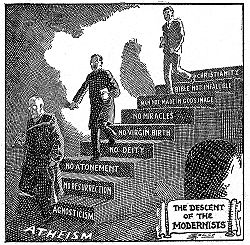
Of course, the reason Grene found Collingwood’s prediction startling was that by the mid-1960s few were decrying the crude mechanism of modern philosophy of nature, certainly within academic philosophy and Anglo-American intellectual life in general. To be sure, Great Books advocates like Mortimer Adler and Robert M. Hutchins had been calling for renewed attention to writers like Aquinas throughout the thirties, forties, and fifties, as had Neo-Thomists like Maritain and Gilson. And even into the early sixties, books like Floyd Matson’s The Broken Image – now totally forgotten (though it received a nice blurb from no less than F. A. Hayek) – decried what the mechanistic revolution had done to our conception of human nature and political science. But these attitudes were getting further and further from the mainstream, and by the end of the sixties were entirely passé. Though modern intellectuals seemed for a thirty-year period mid-century to be waking from their dogmatic slumbers vis-à-vis the mechanistic revolution of the early moderns, they eventually hit the metaphysical snooze button, rolled over, and went back to sleep.

Why? Good question. No doubt the reasons are complex, but I would conjecture that the dominant factor within Anglo-American academic philosophy was the influx of European intellectuals into American universities during the thirties and forties, as they fled Nazi tyranny. In philosophy, a great many of these people were beholden to logical positivism and related ideas, and their crude scientism was passed on to their students – students who by the 1960s were dominating the field. In light of the work of Quine, Kuhn, and other critics of positivist dogmas, this scientism would eventually be softened somewhat. But these critiques were generally internal, and did not challenge scientism at the most fundamental level (despite their having resulted in recent decades in a revival of metaphysics as a sub-field within analytic philosophy). In particular, they did nothing to restore awareness of the problematic character of the mechanistic conception of nature inherited from the early moderns.

Or at least, nothing until recently. Fortunately, the alarm clock seems to be ringing once again. As I note in TLS, a return to notions surprisingly similar to the Aristotelian-Thomistic ideas of formal and final cause (even if not always under those labels) can be seen in various areas of contemporary philosophy, and in writers who have no particular interest in A-T metaphysics as such nor any theological ax to grind. To take just a few examples: In philosophy of science and general metaphysics, there is the “new essentialism” of philosophers like Brian Ellis, Nancy Cartwright, Crawford Elder, and George Molnar; in philosophy of biology there is a renewed respect for teleology in the work of writers like Andre Ariew and J. Scott Turner; in philosophy of action there are defenses of the irreducibly teleological nature of action by writers like Scott Sehon and G. F. Schueler; in ethics there is the neo-Aristotelian biological conception of the good defended by thinkers like Philippa Foot and Michael Thompson; and a general trend toward “non-reductionist” forms of naturalism can be seen in philosophy of mind and other sub-disciplines within philosophy.

Again, not all of these writers would see in their views a return to Aristotelian themes, nor would most (or even any) of them support the use to which Thomists would put those views. But however inadvertently and piecemeal, these trends do in fact constitute a revival, sometimes under novel language, of some of the metaphysical ideas of the Scholastics. And of course there are yet other contemporary analytic philosophers whose work is self-consciously Thomistic or Scholastic – for example, John Haldane, David Oderberg, Gyula Klima, Christopher F. J. Martin, James Ross, and other writers sometimes characterized (though not always by themselves) as “analytical Thomists.”

Willey writes: “As T. E. Hulme and others have pointed out, it is almost insuperably difficult to become critically conscious of one’s own habitual assumptions; ‘doctrines felt as facts’ can only be seen to be doctrines, and not facts, after great efforts of thought, and usually only with the aid of a first-rate metaphysician.” (p. 12) The lazy naturalism and scientism that inform most contemporary intellectual life, and which underlie the New Atheism, are precisely such “doctrines felt as facts,” prejudices to which most secularists do not even realize there is any rational alternative. Even with the metaphysical alarm clock ringing once more, today’s dogmatic slumberers may just hit the snooze button yet again. But maybe not. We live in hope.

Saturday, July 18, 2009

TLS on radio

John Loeffler recently interviewed me about The Last Superstition for his show Steel on Steel. You will need a username and password to listen to it, but John has kindly provided us with one: Use “feser” for both, and you can listen to his entire show archive for 40 days (including interviews with John Bolton, J. Budziszewski, David Novak, Tom Tancredo, James Kalb,and many others). The interview begins about halfway into the show.

(For earlier radio interviews about TLS go here.)

Wednesday, July 15, 2009

Declining standards

For Nietzsche, European civilization has been in decline since Plato. For Heidegger, the rot set in even earlier, with the Pre-Socratics. It is widely held among secularists that the history of Western civilization between the rise of Christianity and the Enlightenment was a centuries-long dark age that stalled the scientific progress that had been initiated by the Greeks and only restarted with Bacon, Galileo, Descartes, and Co. Marxists tell us that the entire history of the human race is a history of one form of oppression supplanted by another. Feminists tell us that it is, above all, a history of men oppressing women. Multiculturalists tell us it is a history of the West oppressing the rest.

Other examples could be given. The idea that vast stretches of human history – centuries, even millennia – have been shrouded in moral and intellectual darkness is taken very seriously.

Except when that idea is given a conservative twist. When a conservative says that things have been getting worse since the 1960s, or since FDR, or since the Enlightenment, or (as Richard Weaver says in Ideas Have Consequences and as I argue in The Last Superstition) since William of Ockham, the very idea of a decades- or centuries-long decline is dismissed as inherently crackpot, the ravings of a misanthropic crank or misfit.

Why the double standard? Just asking, as they say.

(The obvious answer might seem to be that the developments bemoaned by conservatives are “progressive” ones, and thus couldn’t possibly mark a decline. Out of charity, though, I won’t put this answer into the mouth of the left-winger, since it is blatantly question-begging. Surely the lefty has a better answer. So what is it?)

Tuesday, July 14, 2009

Scholastic’s Bookshelf, Part I

In a belated reply to a reader’s request, and because I suspect other readers might find it useful, here is the first in an intermittent series of posts on some recommended reading for those interested in Neo-Scholastic and Thomistic thought. For the most part I will not mention obvious or recent works, but rather out-of-print or otherwise hard to find books, especially those from the period prior to Vatican II when the Neo-Scholastic tradition was at its height. Nor will I attempt to be exhaustive, but will focus on works which are in some way particularly noteworthy or useful. Many of the books I will mention can be acquired fairly cheaply from online booksellers, though some are more expensive. Some have recently been reissued by publishers specializing in reprinting long out of print books, like Wipf and Stock, Kessinger, or TAN Books. A few are available via Google books or have otherwise been posted somewhere online. All of them are worth tracking down.

In this initial post, I will recommend some reference books and other general works which readers new to the Neo-Scholastic tradition will find invaluable in finding their way around its vast conceptual structure and getting accustomed to its sometimes forbidding and alien technical vocabulary. Future posts will provide reading recommendations vis-à-vis specific subject areas like natural theology, ethics, epistemology and metaphysics, philosophical psychology, logic, dogmatic theology, etc.

General reference:

George F. McLean, ed., An Annotated Bibliography of Philosophy in Catholic Thought 1900-1964

Pietro Parente, Dictionary of Dogmatic Theology

Bernard Wuellner, Dictionary of Scholastic Philosophy

Bernard Wuellner, Summary of Scholastic Principles

The McLean volume is an invaluable guide to the Neo-Scholastic philosophical literature of the period prior to Vatican II, essential for those interested in serious research into the system of thought these writers developed and defended. It is divided into subject areas – metaphysics, ethics, natural theology, etc. – and provides useful short descriptions of the contents of most of the books it lists.

The entries in the Parente and Wuellner dictionaries are philosophically and theologically substantive. Wuellner’s Summary is a lengthy and detailed outline of the theses that tend to be held in common by most Neo-Scholastic Thomists in all the main areas of philosophy. While a thorough understanding of the arguments for these various theses requires immersion in the literature, this book provides an invaluable guide to the overall structure of the Thomistic system as most writers in the Neo-Scholastic tradition understand it. It also provides a brief account of those areas with respect to which there is disagreement among Scholastics.

General works on Neo-Scholasticism:

Helen James John, The Thomist Spectrum

Written in the mid-1960s, this book provides a very useful brief account of the various approaches to Thomism prominent up to that time. Particularly useful is the treatment of the differences between Garrigou-Lagrange, Maritain, and Gilson, given that these writers are often mistakenly lumped together by non-Thomists as if they were all saying more or less the same thing (they definitely were not, certainly not on every important issue). Also treated are those approaches to Thomism which emphasize its affinities with Platonism (e.g. Fabro) and “Transcendental Thomism.”

[A very brief treatment of the various approaches to Thomism, but one which pretty much covers all the various schools – and, since more recent, includes some that John's leaves out – can be found at the beginning of Benedict Ashley’s The Way toward Wisdom. Also recent and useful is chapter 1 of Brian Shanley’s The Thomist Tradition. There are of course other recent and more in-depth accounts of the various schools of Thomism. Gerald McCool’s trilogy Nineteenth-Century Scholasticism, From Unity to Pluralism, and The Neo-Thomists is one example, and Fergus Kerr’s After Aquinas is another. These works might be too lengthy and/or idiosyncratic to be helpful to the novice, though they are definitely worth the attention of the more advanced student. (FYI, before long I will be putting up a couple of posts to serve as a brief primer on the various schools of Thomism.)]

Reginald Garrigou-Lagrange, Reality: A Synthesis of Thomistic Thought

Cardinal Mercier, ed., A Manual of Modern Scholastic Philosophy (in two volumes)

A. D. Sertillanges, Foundations of Thomistic Philosophy

Daniel J. Sullivan, An Introduction to Philosophy: The Perennial Principles of the Classical Realist Tradition

Charles Baschab, Manual of Neo-Scholastic Philosophy

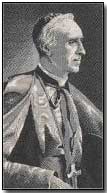
These works provide general treatments of the Neo-Scholastic system which are more in-depth than what is provided by a work like Wuellner’s Summary, though less in-depth than what one will find in a work on (say) metaphysics or natural theology specifically. Garrigou-Lagrange and Mercier were among the most eminent figures of twentieth-century Neo-Scholasticism, and Sertillanges was significant too. Garrigou-Lagrange’s Reality covers dogmatic theology as well as philosophy. (It has recently been reprinted by Ex Fontibus.) The volumes edited by Mercier (pictured above) contain articles by prominent Neo-Scholastic writers of the early twentieth century (including Mercier himself) on each of the main sub-disciplines of philosophy.

Sullivan’s book is the most elementary of the ones listed, but for that reason it is about as clear and accessible an introduction to philosophy written from an Aristotelian-Thomistic POV as you will find. (It has been kept in print in recent years by TAN Books.)

A more recent work providing an overview of philosophy from an Aristotelian-Thomistic perspective is William A. Wallace, The Elements of Philosophy: A Compendium for Philosophers and Theologians.

Finally, some books that are not quite Neo-Scholastic, but still Aristotelian: John Wild’s Introduction to Realistic Philosophy and Mortimer Adler’s Ten Philosophical Mistakes. Wild is an interesting case – a Harvard philosopher who defended a broadly Aristotelian position before moving in the direction of phenomenology and existentialism in the late 1950s. Adler is well-known, of course, as is the book in question. It is not a general introduction to Aristotelian philosophy and it is elementary, but it is a very useful summary of some of the errors Aristotelian and Thomistic philosophers see in some of the characteristic assumptions made and positions taken by modern philosophers.

(Next in the series: Natural theology)

Monday, July 13, 2009

Latest reviews of TLS

“In his work The Last Superstition, Edward Feser melds philosophic acumen with an acute sense of humor, steadily dismantling the philosophic claims of Dawkins, Hitchens, Dennett, and others… a sharp critique of modern philosophical errors… One hopes that Feser's work will spur further interest in classical Thomistic and Aristotelian metaphysical thought.” Michael O’Halloran, Review of Metaphysics

“Every argument atheists raise against belief in God can be dismantled like a cheap watch by [people] who know how to do it. And, as The Last Superstition shows, Edward Feser really knows how to do it… If [atheists] were willing to dispassionately consider the case for theism that Feser builds here, they would come away from reading this book with their confidence profoundly shaken.” Patrick Madrid, Envoy Magazine

Monday, July 6, 2009

Summer reading

Several substantive new posts are in the works, but I’m momentarily preoccupied meeting some looming deadlines. In the meantime, here are some philosophical posts worth checking out: Michael Liccione, my new What’s Wrong with the World co-blogger, on ID theory. Lee Faber on MacIntyre on Scotus. Incompatible novel takes on Hume on causation from Bill Vallicella and James Chastek. (James is responding to my recent post on Hume. I plan to reply to him as soon as I get a chance.)

UPDATE 7/8: Some useful reading recommendations from Lydia McGrew vis-à-vis the historical reliability of the New Testament. The books are mostly older ones, and in theology and philosophy, older usually means better. (In that connection, I plan soon to post a series of Neo-Scholastic reading recommendations, in belated response to a reader’s request made some time back. Stay tuned.)

Friday, July 3, 2009

Conservatism, populism, and snobbery

In honor of the soon-to-be-beatified John Henry Newman, I'm reprinting this post of November 29, 2005 from the late, lamented Right Reason blog, in which the Cardinal is prominently quoted.


Conservatives are accused of all sorts of things, and sometimes the accusations are flatly incompatible. For instance, liberals often allege that conservatives want to do away with government almost entirely, though they also frequently claim that conservatives want to impose a police state in the name of national security or religious fundamentalism. How can both these accusations be true? The contradiction, many liberals would say, is not on their part, but on the part of conservatives. Conservatives, they allege, are inconsistent (unless they are just insincere) in claiming to uphold both small government and national security, both liberty and traditional morality. Some libertarians too would accuse conservatives of being either muddleheaded or insincere, and in particular of being disguised liberals or even socialists, since despite their talk of freedom conservatives typically refuse, either in rhetoric or in practice, to advocate the sort of minimal state preferred by Ayn Rand or Robert Nozick. To a certain kind of libertarian mind, if you favor even a modest social safety net, or airport weapons searches, or the criminalization of heroin, you are on all fours with Clement Attlee, and maybe even Joseph Stalin.

The truth, of course, is that conservatives are neither closet anarchists nor closet totalitarians. Nor are they muddleheaded. Indeed, if anyone is muddleheaded, it is those critics of conservatism who refuse to see that their way of dividing up the territory of possible views in political philosophy is too crude and simple-minded -- who assume, for example, that if you favor limited government, you must therefore also favor legalized abortion, or legalized pornography, or the rejection of all taxation, on pain of inconsistency. In fact, conservatives simply adhere to principles (natural law, Burkean, or whatever) that happen to entail, quite systematically and coherently, a view of the proper scope of state power that rejects both the extreme of statism and the opposite extreme of pure laissez-faire. When concepts like rights, freedom, property and the like are properly understood, they will, from the conservative point of view, be seen to rule out equally both anarchism and socialism, both libertarianism and egalitarian liberalism, and to favor something different from all of them. It might be that conservatives are mistaken, but they aren’t contradicting themselves or being disingenuous simply by virtue of defending a conservative (as opposed to liberal or libertarian) point of view.

Another area where inconsistent accusations are frequently hurled at conservatives is that of culture. Conservative critics of the modern university are often said to be beholden to an outmoded and elitist vision of the canon more suited to the Victorian era than the Age of Hip-Hop, and blind to the merits of incorporating studies of popular culture into the curriculum. In the sphere of religion, those who favor more traditional liturgical forms (e.g. Catholics attached to the Tridentine Mass) are dismissed as insensitive to the need for a more egalitarian spirituality of the sort enshrined in the substitution of the vernacular for Latin and the replacement of Gregorian chant with folk guitars and hand-clapping. At the same time, conservatives are also frequently accused of being the enemies of high culture and the champions of populist vulgarity. After all, aren’t those who vote for conservative parties more likely to attend a NASCAR event than an opera? Don’t conservatives want to cut funding for PBS while giving tax breaks to Wal-Mart?

An irony in this is that such charges are just as plausibly made against the very liberals who so glibly fling them at conservatives. It is liberals, after all, who have promoted the most vulgar of tastes in churches and classrooms – it wasn’t conservatives who gave us “clown Masses” and Porno 101 -- while also heaping contempt on those whose interest in public television goes no farther than Sesame Street, or who much prefer a Big Gulp to even a Beaujolais. The same people who take the most absurd pains to find deep meaning in the thuggish grunts of rappers like Tupac Shakur and Eminem seethe in their hatred for what they imagine to be the pop culture preferences of evangelical Christians, Southerners, and the denizens of trailer parks and shopping malls. Liberals are hardly outdone by conservatives in combining snooty elitism with egalitarian philistinism.

In any event, what we have here is once again a failure to understand that conservatism represents an alternative to the various attitudes it is falsely accused of embodying. Conservatism is neither populist nor snobbish, any more than it is either laissez-faire or statist. It does not believe that the common man is always right, and it does not believe that he is always wrong. While it is suspicious of the fleeting passions of the multitude, it is equally suspicious of those who would dismiss the deepest feelings of the mass of mankind as just so much ignorance and bigotry waiting to be socially engineered out of existence. The reason has to do with conservatism’s distinctive conception of moral and social knowledge, and with its organic view of society. The conservative takes respect for both untutored common sense and learned reflection, and indeed for both the common man and the learned man, to be essential to a well-ordered society.

Conservatism regards tradition as the distillation of the moral and social wisdom of centuries, and as embodying more information about the concrete and complex details of human life than is available to any single human mind or even any single generation. This by no means makes tradition infallible, but it does entail that there is a presumption in its favor, that traditional practices are more likely to serve human interests than anything someone might dream up from the comfort of the faculty lounge or seminar room, and that the burden of proof therefore lies with the moral or social innovator rather than the defender of tradition. (See here for a detailed exposition of one version of this sort of view, and a defense of it against several common misunderstandings.)

Now it is an occupational hazard of intellectuals to overestimate the power of individual human intelligence, and for this reason they are excessively prone to overestimate their ability to improve upon traditional institutions and practices. Non-intellectuals, by contrast, are more likely to have their deepest values shaped by long-standing tradition rather than by sustained reflection. As a result, intellectuals are bound to be more hostile to tradition and non-intellectuals more sympathetic to it, which entails, however seemingly paradoxically, that from the conservative point of view the average person is more likely than the intellectual is to be wise in the ways of the world, at least where morality and other aspects of everyday practical life are concerned. (Hence William F. Buckley’s famous line to the effect that he’d rather be governed by the first hundred names in the Boston phone book than by the faculty of Harvard.)

Of course, the average person can sometimes be seriously wrong, but often this is a consequence of his having been led astray by some demagogic intellectual or pseudo-intellectual: the frustrated socialist agitator Mussolini and the frustrated artist Hitler are two vivid examples, and of course, demagogic communist pseudo-intellectuals are a dime a dozen (witness Lenin, Stalin, Mao, Pol Pot, Castro, Che Guevara, et al.). Unruly and fleeting emotions stirred up in the face of immediate crises are not where the conservative sees the wisdom of the common man. Rather, it is in those sentiments that remain largely unaltered generation after generation, and through periods of calm as well as periods of emergency, that the average person is far more to be trusted than the intellectual. For these are the attitudes which, by virtue of their harmony with tradition, are most likely to reflect the truth about the human condition.

John Henry Newman had as refined and learned a mind as any, and yet he famously wrote that “I will not shrink from uttering my firm conviction, that it would be a gain to this country, were it vastly more superstitious, more bigoted, more gloomy, more fierce in its religion, than at present it shows itself to be” (and this during the Victorian era, long before our flaccid therapeutic age). Part of what he meant is that the serious fervor and devotion that serious religion has always demanded of the believer if he is to be saved is hard to maintain when one is constantly worried that he might offend the sensibilities of others who believe differently, or if religion is watered down into a thin humanistic social justice ethic that differs little from its secular rivals. But the point has more general application, and is a sober one too, Newman’s colorful language notwithstanding. Even if traditional morality has, as the conservative insists, a rational presumption in its favor, it is also very demanding, and there are always temptations to fudge it wherever possible. It takes real deep-in-the-gut conviction on the part of the mass of mankind if it is generally to be respected, and this entails that it be treated as a sacred and unquestioned obligation rather than a negotiable debating position. If the justification for traditional morality is rationally superior to the justification for its overthrow, its real-world motivation nevertheless must, as a matter of sociological fact, be visceral rather than intellectual. Thus intellectuals, even conservative intellectuals, cannot be trusted to maintain it as faithfully as the common man; indeed, there is even a danger that, if the conservative intellectual too readily endorses his liberal critic’s insistence that a rational case for it must be made, he might inadvertently undermine its force by making it seem to be just one alternative among others. A truly conservative program, then, cannot rest content with the defense of conservative policy on social-scientific and abstract philosophical grounds; it must also be a defense of the epistemological credentials of the “prejudices” of the average person (in the sense of “prejudice” emphasized by Burke, viz. one’s instinctive sense of what is proper and improper, rooted in everyday human experience rather than abstract reason) and thereby of their right to hold the views they do on the basis of such “prejudice.”

At the same time, rough pub dwellers and street sweepers are not the people Newman, or any other sane person, wants writing his philosophy books. Nor, since tradition, and thus the prejudices of the common man, can sometimes be wrong, can they simply be given the last word (even if, to paraphrase J. L. Austin on ordinary language, they are the first word). The learned have their proper place in society too, which sometimes involves correcting the errors of the vulgar -- even if only on the basis of more ultimate premises that the learned share with the vulgar, rather than on the basis of some novel metaphysic and ethic spun from whole cloth. And that the learned, and everyone else, have their place brings us to the other component of the conservative attitude toward culture, the organic conception of society mentioned above. For the conservative, it is not the business of the learned condescendingly to scorn the tastes and attitudes of the multitude, and it is not the business of the multitude ignorantly to despise the subtleties of the learned. Every person plays a necessary function in the body of society, and his tastes and cultural practices will naturally reflect his position in the overall order. The reflections of philosophers and poets give guidance and inspiration to the community, but the common sense of the average person provides ballast, ensuring that the rarefied speculations of intellectuals never range too far from the hard earth of ordinary human experience. Here, as in other areas of human life, the conservative tends to see those in different walks of life as complementing each other rather than competing with each other: men need women, and women need men; the young need the old, and the old need the young; labor needs capital, and capital needs labor; and so forth. As Russell Kirk put it (quoting Marcus Aurelius) “We are made for cooperation, like the hands, like the feet.”

From the conservative point of view, it is pathological to think that vulgar tastes – and especially ones that are not merely vulgar, but positively immoral, as is the case with vast swaths of what passes for popular entertainment today -- ought to be set on a par with refined ones, as if comic books and epic poetry were merely different kinds of “texts” to which a scholar might devote his attention. But it is also folly to suppose that everyone could be made to appreciate literature, fine art, and music if only funding to the Corporation for Public Broadcasting were increased. (Indeed, the two tendencies work in symbiosis: egalitarians pretend that everyone is capable of the most refined learning, and to prove it, they redefine what counts as “refined learning” so that college courses in “rock history” and “hip-hop culture” can help a young “scholar” more easily “earn” a bachelor’s degree.) Action movies and race cars, cheeseburgers and milk shakes have their place, just as much as philosophy and poetry, fine food and fine wine. To scorn the latter is to be a vulgarian; to scorn the former is to be a snob. Things go wrong when either the vulgarian or the snob has the upper hand. They go very badly indeed when vulgarians and snobs share power, as they do in modern Western society, which seems to be ruled jointly by the Rupert Murdochs and NPR bureaucrats of the world. Things go well when both common and refined tastes are afforded their due respect as necessary parts of the overall social order -- that is to say, when the conservative sensibility prevails.

Thursday, July 2, 2009

Gordon on Cohen

It is one of the oddities of contemporary academic life that the right-winger often finds more worthy and formidable opponents the farther he looks to the left. During the last half-century or so, mainstream academic liberal philosophers of the Rawls or Dworkin stripe largely ignored the views of writers like Hayek, Oakeshott, and Scruton. Nozick got attention, of course, but (a) it was often tinged with a hostility such liberals would never display toward other opponents, (b) it treated Nozick as if he were an eccentricity rather than a representative of a serious tradition of political thought, and (c) it was usually superficial – certainly Rawls himself never replied to Nozick with the depth and seriousness the latter’s critique merited.

In fairness, this has changed a little in recent years as at least some academic liberal philosophers have been willing more seriously to engage the arguments of libertarians and of social conservatives like John Finnis and Robert P. George. It was also, I think, more an American phenomenon than a British one, though that may be because the center of political gravity is in Britain further to the left than it is in the U.S. In any event, during the period in question one could often find the most serious responses to thinkers like Hayek and Nozick coming from socialists rather than liberals. The work of G. A. Cohen is exemplary in this regard. Cohen is perhaps the most formidable socialist thinker writing today. His book Self-Ownership, Freedom, and Equality is among the best things ever written on Nozick, probing Nozick’s position in depth – and defending it from more superficial critiques – while trying to find some way of avoiding his inegalitarian conclusions. If your views are anything like mine, you will find Cohen’s conclusions completely unacceptable. But you will also find that his arguments and analysis are fascinating indeed and repay careful study.

The esteemed David Gordon reviews Cohen’s latest book Rescuing Justice and Equality, at length, here. Like much of Cohen’s recent work, the book is a probing critique of mainstream egalitarian liberalism from a position further to the left. Cohen is the guilty conscience of academic egalitarianism, always challenging his colleagues to be more consistently egalitarian. He is certainly more interesting than Rawls ever was. Rawls is at bottom a mere liberal apologist, and not a good one either, considering that he never seriously considers the most formidable challenges to his basic liberal assumptions. Cohen is a serious critical analyst of his own deepest commitments. His egalitarianism is unflinching, but he at least tries to meet the other side at its strongest point.

Monday, June 29, 2009

Richard’s Holiday Camp

New Atheists like Richard Dawkins feign outrage at any suggestion that their creed itself amounts to a kind of religion – even as (for example) they issue their own suggested revisions of the Ten Commandments (see The God Delusion, pp. 263-4). Now, a reader informs me, Dawkins has decided to sponsor his own version of Bible Camp. I kid you not. All Dawkins needs now is a camp song; have fun coming up with your own lyrics.

Wednesday, June 24, 2009

The materialist shell game

Materialists sometimes argue that the mind is bound to succumb to naturalistic explanation, because everything else has. How could it be the only hold-out? As I have argued in several places (most recently and at greatest length in The Last Superstition), far from being the knock-out blow some materialists think it, this argument actually shows how very shallow and historically ill-informed much materialist thinking is. For, whether explicitly or implicitly, materialism is committed to the mechanistic conception of matter inherited from early modern thinkers like Galileo, Descartes, Hobbes, Boyle, and Locke, where the core of this conception – or the only part of it that has survived over the centuries, anyway – is the idea that neither goal-directedness or final causality, nor sensory qualities like color, odor, taste, sound, and the like as we experience them, exist in the objective material world, but only in the mind of the perceiver. Matter, that is to say, was simply defined in such a way that (a) mental properties were taken to be paradigmatically non-material, and (b) certain features that common sense and the Scholastic tradition regarded as inherent to matter were re-defined as mental. This both facilitated the giving of “naturalistic explanations” – since whatever wouldn’t fit the naturalistic-cum- mechanistic explanatory model was simply defined away as a mere mental projection in the first place, not part of the material world at all – but also guaranteed that the mind would be uniquely resistant to the same sort of explanatory procedure. For the mind was made the rug under which everything that wouldn’t fit the naturalistic model could be swept. By definition, as it were, the same “sweeping” strategy cannot possibly be applied to the mind itself.

Victor Reppert kindly draws his readers’ attention to a passage in my book Philosophy of Mind where I made this point. But it is hardly original with me. Reppert also cites a passage from Richard Swinburne’s The Evolution of the Soul which makes the same point. Thomas Nagel’s famous article “What is it like to be a bat?” makes it too. (Most readers of this article wrongly focus on the bat example itself, quibbling over whether analogies with human experience coupled with neuroscientific knowledge might allow us to infer what it is like to be one. But in doing so they miss Nagel’s deeper and more devastating point that it is the “objectivist” way in which contemporary philosophers tend to conceive of matter that makes a naturalistic explanation of mind – not just the conscious experiences of bats, but any “subjective” conscious mental state – impossible in principle.)

Indeed, the point is as old as modern philosophy itself. It was central to the thinking of the Cambridge Platonist Ralph Cudworth (1617-1689) and the Cartesian Nicolas Malebranche (1638-1715), both of whom emphasized that the “mechanical philosophy” necessarily entails dualism. It is also at least implicit in Descartes and Locke. If you are going to insist that matter is comprised only of colorless, odorless, tasteless, soundless particles devoid of any inherent meaning or goal-directedness, then of course qualia and intentionality are going to have to count as immaterial, and color, odor, taste, sound, etc. understood as objective features of nature would simply have to be re-defined (in terms of patterns of motion in particles, or whatever). Hence the reason so few modern philosophers, until very recently, followed Hobbes in his materialism, is not because they were afraid to follow out the implications of modern science, but rather precisely because they did follow out its implications (that is, insofar as modern science tends to take a “mechanical” conception of matter for granted). And the reason so many recent philosophers have followed Hobbes is, I would suggest, that they have forgotten the history of their subject and not thought carefully about the conception of matter they are implicitly committed to. When a contemporary philosopher of mind with naturalistic sympathies does think carefully about this conception, he tends either to come to doubt that naturalistic models of the mind really can succeed (as e.g. Fodor, McGinn, and Levine do in their various ways), or to suggest that it is only by developing some radically new conception of matter that naturalism can be defended (as e.g. Nagel and Galen Strawson do in different ways), or to adopt some “naturalistic” form of dualism (as e.g. Chalmers does explicitly and Searle does implicitly, despite his best efforts to avoid it.)

The upshot is that the materialist’s “everything else has been explained naturalistically” shtick is little more than a shell game. “Everything else” is “explained” only by hiding the recalcitrant features, like a pea, under the shell of the mind. The illusion only works precisely because there is a shell to hide things under, and thus requires dualism. To assume otherwise is like assuming that a shell game scam could successfully be carried out either by hiding, not only the peas, but also every shell under a shell (as reductionist forms of materialism effectively do insofar as they assume that the same strategy applied to explaining heat, color, sound, etc. – that is, carving off and “hiding” the subjective element and re-defining the phenomenon in mechanistic terms – can be applied to mental states themselves) or by getting rid of the shells entirely (as eliminative materialism effectively does). Not even the boldest sidewalk scammer would attempt such folly. For that you need an intellectual in the grip of a theory.

Wednesday, June 17, 2009

Empiricism versus Aristotelianism

In my previous post, I noted how empiricists and Aristotelians differ over the relationship between intellect and imagination, and that this difference has major metaphysical implications. By popular demand – OK, a single request – let me expand on that.

Both empiricists and Aristotelians hold that “nothing is in the intellect that was not first in the senses,” as the hoary Aristotelian dictum puts it. But they disagree about what this means.

For Aristotelians, sensation leads to the formation of “phantasms” (very roughly, mental images), and from these objects of the imagination, the intellect in turn abstracts universals. So, for example, the perceptual experience of various triangles leads to the formation of various mental images of triangles, and from these the intellect derives an abstract general concept of triangularity. Such general concepts are nevertheless irreducible to mental images. For any mental image applies, strictly speaking, only to certain members of a class; for example, any particular mental image of a triangle is necessarily going to be either of an isosceles , scalene, or equilateral triangle, of a black, blue, or green triangle, and so forth. But the abstract concept of triangularity applies to all triangles without exception. Mental images are vague and indeterminate when they concern something complex; for instance, a mental image of a chiliagon (a 1,000-sided figure) cannot be distinguished from a mental image of a 1,002-sided figure, or even from a mental image of a circle. But the concept of a chilaigon is clearly distinct from the concept of a 1,002-sided figure or the concept of a circle. There are things we can form no mental image of at all – abstractions like law, economics, and love, for example – that we nevertheless have clear concepts of. And so forth.

Since Wittgenstein, contemporary philosophers have been pretty well inoculated against the error of supposing that concepts could possibly be reduced to images of any sort. (Though they hardly needed Wittgenstein to tell them that – Platonists, Aristotelians, Thomists, and rationalists have emphasized it for centuries, or even millennia.) And yet such a reduction, a view known as “imagism,” was a key feature of the classical empiricism of Locke, Berkeley, and Hume. (Sometimes it is disputed whether Locke was really committed to it, though not very plausibly, I think.) Berkeley and Hume rightly concluded that imagism entails that there are no abstract concepts, for every mental image is always inherently particular rather than universal. (Here as elsewhere Locke failed to see all the implications of his position.) So-called “general ideas” are for them really just particular ideas annexed to a general term (together, in Hume’s case, with a disposition to refer to all ideas resembling that particular one by the term in question).

This is, however, simply a reductio ad absurdum of the (imagist) theory that leads to it. For we simply and obviously do have abstract or universal ideas – triangularity is one of them, and there are countless others – and any theory that implies otherwise is thereby proved to be false. Furthermore, Berkeley’s and Hume’s attempts to defend their account of “general ideas” are notoriously unconvincing. Berkeley says that a particular idea stands for or represents other ideas of the same sort. But what is it for one idea to stand for or represent other things? And in virtue of what are the various represented particular ideas “of the same sort”? The obvious answer to the first question seems to be “It is to be an abstract concept under which particular things fall,” and, to the second, “In virtue of exemplifying the same abstract concept.” That is to say, the seemingly obvious answers to these questions presuppose the existence of the very thing Berkeley denies. Or at least, if these answers are wrong, Berkeley needs to provide some alternative answer, which he does not. He also says that a particular idea is made general when the mind selectively attends to some features of it and not others. But how can this “selective attention” to some features possibly fail to presuppose an abstract concept of that which has precisely those features and not the ones attended to? Again, the view seems to presuppose precisely what it denies, and again we are given no reason to suppose otherwise.

Hume basically takes all this on board, and only calls greater attention to the problem by saying that we have a disposition to call “resembling” ideas by the same general term. For we want to ask: In virtue of what do they resemble? By exemplifying the same abstract concept, surely; or if not, we need to be told why not, and we’re not.

Now you could take the imagist position in question to form the basis of an argument for nominalism: Concepts are images; images are particular rather than universal; therefore concepts are particular. (The claim that everything else is particular too would then be argued for independently as a “mop-up” operation, since the universality of concepts is arguably the hardest case for nominalism.) Or you could take imagism to presuppose nominalism: Concepts, like everything else, must be particular; mental images, which are particular, are the only things for concepts plausibly to be if concepts are not universal; so concepts must be mental images. Either way, imagism is just false – having been decisively refuted over and over again by (as I have said) Platonists, Aristotelians, Thomists, and rationalists – and both arguments are therefore unsound.

All the same, Berkeley and Hume rode this dead horse amazingly far. It arguably underlies all of Berkeley’s arguments against the possibility of material substance. For the concept of matter, Berkeley says, would have to be something that abstracts away from all ideas of sensation, and (he claims) there are no such abstract (i.e. non-imagistic, non-particular) ideas. Similarly, Hume’s skepticism about material substance depends on the idea that we cannot trace the idea of material substance to any impression – which would be the case only if we assume (as Aristotelians would not but classical empiricists would) that ideas or concepts cannot be anything more than a faint copies of sensations (and thus necessarily fail to transcend the particularity of sensation), rather than being abstractions from them (and thus capable of transcending that particularity). The claim that all ideas or concepts not only begin from sensation but cannot outstrip it also underlies Hume’s claim that we can have no idea of necessary connection because we have no impression of it. This can be so, again, only if ideas or concepts are faint copies of impressions (that is to say, if they are, more or less, mental images) and thus cannot transcend the particularity of the impressions from which they derive.

If the mind’s conceptual powers do outstrip the limits classical empiricism would put on it, however – as they obviously do given that we have many concepts that cannot be accounted for on classical empiricism – there is no reason to take seriously the bizarre and/or skeptical conclusions vis-à-vis causation, substance, etc. that classical empiricists derived from their false conception of these limits.

Tuesday, June 16, 2009

Hume, science, and religion

Suppose you buy Hume’s famous analysis of causation, and thus deny that we can have any knowledge of objective causal connections in nature (either because there aren’t any – the traditional, “verificationist” interpretation of Hume – or because there are but the mind can never genuinely know or understand them – the newer “skeptical realist” interpretation). You shouldn’t buy it (for reasons set out in The Last Superstition), but suppose you did. It is understandable why, in that case, you’d reject First Cause arguments for God’s existence. If we can’t have any knowledge of objective causal connections between things, then we can’t have knowledge of a First Cause.

But how in that case could you fail to reject modern science as well? Wouldn’t theism and natural science – which seems to be in the business of discovering objective causal connections between phenomena – stand or fall together? A way around this might be to adopt some kind of non-realist interpretation of science. You could take the instrumentalist view that scientific theories don’t really tell us anything about the nature of things, but are merely useful tools for predicting experiences.

One problem with this response is that non-realist interpretations of science are just implausible. As Hilary Putnam famously put it, realism is “the only philosophy that doesn’t make the success of science a miracle.” Another problem is that it arguably wouldn’t really address the heart of the objection anyway, but only push the problem back a stage. For if you are going to treat scientific theories as tools for predicting experiences, then it seems you are presupposing that at least one thing in the world – the experiencing human mind itself, or your own mind anyway – manifests causal regularities that can be captured in scientific theories. Even as a Humean you will do so; for example, qua Humean you will suppose that ideas come from, and can only come from, antecedent impressions; that they are combined only in accordance with the three Humean principles of association; and so forth. These seem precisely to be causal regularities, whose existence guarantees that there is an orderly set of experiences for an instrumentalist science to describe and predict.

Of course, this sits poorly with Hume’s own analysis of causation. If (as Hume claims) any effect might in principle follow from any cause or from none at all, where does he get off telling us that every idea (apart from the famous “missing shade of blue,” anyway) must derive from an antecedent impression? If there are no objective “necessary connections” between causes and effects – the very idea of necessary connection being a mere projection of the mind’s subjective expectation of A on the occasion of B, a propensity produced by observed constant conjunctions of A and B in the past – then why exactly must ideas behave only in accordance with the principles of association? Indeed, even the notion of a “propensity” to expect such-and-such an effect, and of this propensity’s being “produced” in the mind by constant conjunction, are themselves causal notions. So does Hume mean to say that all of these claims about the mind and about causation are themselves mere projections based on nothing more than observed regularities in the order of our impressions and ideas, and have no objective validity? Presumably not; indeed, the very idea seems not only implausible, but utterly incoherent. All the same, consistently pushing through a radical Humean skepticism about causation would seem to require applying Hume’s analysis of causation to Hume’s own claims about the mechanisms that govern the mind. And while this would certainly undermine First Cause arguments, it would also undermine science too – precisely because it would undermine almost every claim to knowledge, including Hume’s own theory. The traditional, “radical skeptic” reading of Hume leaves us with a snake that eats its own tail.

A more promising strategy for the Humean who wants to accept science while rejecting natural theology would be to take a softer “New Hume” or “Hume as skeptical realist” line, and deny that the Humean analysis of causation really entails taking a non-realist approach to science in general or causation in particular. One could hold that Hume’s position merely entails that we cannot strictly know or understand objective causal connections, but not that there are no such connections. The idea would then be that Hume’s view that our belief in objective causal relations is impervious to rational criticism anyway, since we can’t help but cling to it given our nature, also entails that the science we base upon this belief is something we can hardly bring ourselves consistently to doubt. Yet if causation might in fact have an objective basis even if we can’t know or understand it, so too would science. Hence we need not dismiss science, any more than causation, as an illusion. We may be unable either to justify it (rationally speaking) or to doubt it (psychologically speaking), but it doesn’t follow that a Humean has to regard our belief in it as either false or strictly meaningless. (I am not claiming that all of this is plausible or even coherent all things considered, either as an interpretation of Hume or as a defensible position in its own right. The point is just that this is a more promising position for a Humean to take if he wants to reject First Cause arguments but accept science.)

OK, so where does the rejection of First Cause arguments fit in? Why wouldn’t they, like science, survive a less radical “skeptical realist” Humeanism? If the mere possibility of objective (though unknowable) causes coupled with our animal faith in them lets empirical science off the hook, why not natural theology? The answer would seem to be that in the view of the Humean, and indeed of Hume himself, though we cannot know or understand objective causal connections, we can lay down criteria for determining which particular purported causal relations are likely to exist, if any causal relations really exist at all. And while the theories enshrined in “our best science” conform to these criteria, arguments for a First Cause do not.

Thus do we arrive at that long and dishonest (or at least woefully ill-informed) skeptical tradition of treating the traditional arguments of natural theology as if they were essentially little more than second-rate empirical scientific hypotheses, feeble exercises in “God of the gaps” reasoning (a tradition given aid and comfort by William Paley and his successors). And thus can the Humean have his scientistic cake and eat it too. For science is just an extension of what we cannot help but believe in “common life,” outside the philosopher’s study. Hence, despite its being rationally unjustifiable, science is OK; and natural theology would be OK too if only it were good science. On this view, it wouldn’t be Hume’s theory of causation per se that undermines First Cause arguments. Rather, the claim would be that considerations of parsimony, empirical adequacy, etc. make theism a less “probable” “hypothesis” than atheism.

The trouble is that, as I show in TLS (and I am hardly the first person to show it), the classical First Cause arguments are not empirical quasi-scientific “God of the gaps” arguments at all, but rather attempts at metaphysical demonstration. And the relevant metaphysics is the Aristotelian kind, which claims precisely to be doing nothing more than extending what we already take ourselves to know in common life. In particular, Aristotelian-Thomistic First Cause arguments attempt to show that the existence of a First Cause is a necessary precondition of there being anything like what common sense understands as “causation” in the first place. So, if for the Humean (or “New Humean”) our “common life” beliefs about causation (a) may well be correct, and (b) are legitimately held by us despite their rationally unjustifiable status, why may we not also accept the conclusion of such First Cause arguments? We are back once again to asking: If science is OK, why not natural theology?

The Humean may at this point object that such arguments still go beyond what an appeal to “common life” can possibly justify, insofar as they presuppose (a) an a priori metaphysical methodology, and (b) that we have a transparent grasp of the essences of things (and in particular of their causal powers). But while such an objection may have force against rationalist natural theology of the sort practiced by Leibniz – I’m not saying it really does, mind you, just conceding this for the sake of argument – it has no force against Aristotelian-Thomistic natural theology. For A-T does not argue a priori, and does not hold that we have in general a complete and transparent knowledge of essences; like the empiricist, the A-T metaphysician insists that knowledge of real existence must be a posteriori, and recognizes limits on our knowledge of the essences of things. Where A-T differs from empiricism is in refusing to collapse the distinction between intellect and imagination, between concepts and mental images – the cardinal sin of modern empiricism, from which all its many other errors follow. Hence A-T also rejects the nominalism that follows upon this chief error (or underlies it, depending on how you look at it), and rejects the radical skepticism about causation, substance, essence, etc. that follows in turn upon imagism and nominalism.

For this reason, while there is a tension between common sense and philosophy even on a “New Hume” view of causation – for given Humean epistemology and metaphysics, how can our common life understanding of causation be even possibly true, since causal connections become not merely unknowable but unintelligible? – there is no such tension in A-T. A-T really is what P. F. Strawson famously called a “descriptive” metaphysics, which leaves common sense intact, while Humeanism is “revisionary” to the core, thoroughly undermining common sense implicitly even when it pays lip service to “common life.” A Humean “skeptical realist” has, when outside his study, to feign complete ignorance of what he learned within it. Even the bare possibility that common sense might be right, the very intelligibility of causation, is ruled out when his methodology is taken seriously. No such pretense would be necessary on A-T even if the A-T philosopher were to entertain doubts about whether genuine knowledge is really possible, for there is nothing in his position (as there is in the Humean position) which casts doubt on the very intelligibility, and not just the knowability, of causes.

If we are really to take “common life” seriously, then, we have to take seriously the metaphysics which makes it even minimally intelligible, namely something like A-T metaphysics. And that means accepting (assuming they are otherwise unobjectionable, as I argue in TLS that they are) the First Cause arguments that follow from it. Conversely, to reject those arguments entails rejecting after all the idea that common sense is right even about the very possibility of objective causal connections – which means in turn rejecting even an “animal faith” justification of our commitment to science.

And that returns us yet again to the question we started out with: How can a Humean consistently accept science and yet reject First Cause arguments for the existence of God? The unavoidable answer seems to be: He can’t. As far as a consistent Humeanism is concerned, science and theism must stand or fall together. But then there is no good reason to be a Humean in the first place, and many good reasons not to be. So perhaps the question is moot.

Saturday, June 13, 2009

You can’t make this stuff up, folks

The Leiter reader who parroted (and still parrots) the “apologist for murder” libel against me is awfully upset because, with some mild sarcasm, I referred to him as…

a logician. (Gasp!)

Specifically, I noted that that’s how he referred to himself on his site.

I know, I know. Nasty stuff. But hey, I was in a bad mood that week – what with, you know, people like this very doofus calling me an “apologist for murder” and what not.

Still, the poor, poor man. Apparently I hurt his feelings. You see, by “logician” he didn’t mean to portray himself as some especially penetrating thinker or anything. Just a guy who studies logic, that’s all. Or something like that. Anyway, he’s written a 1,254 word post explaining himself, so do read it, and disabuse yourself of the terrible calumny I directed against him.

Because, you know, he would never, never misrepresent someone else’s words. Nor would he ever ridicule someone else who defended himself against a libelous misrepresentation.

And Brian, I know you like to ridicule people for offering “lengthy” self-defenses – when you’re not ridiculing them for giving “non-replies,” that is. (The good old “Heads I win, tails you lose” strategy – clever one, Bri!) But please lay off this guy, huh? He’s very sensitive…

UPDATE: Bored with the whole Leiter/"apologist for murder" thing? Me too. But see here for an epilogue, courtesy of Big Bad Brian himself, if you want one last chuckle (or groan).

Farrell Multimedia

John Farrell, whose review of TLS I linked to below, discusses his book The Day Without Yesterday. (HT: Siris)

Thursday, June 11, 2009

But seriously, ladies and degenerates…

From the new Sacha Baron Cohen laugh-fest Bruno (per Drudge):

In one scene Bruno appears on a talk show holding a baby who is wearing a T-shirt reading "Gayby."

The sequence flashes to Bruno having sex in a hot tub while the baby sits nearby. He then boasts to the outraged studio audience that the baby is a man magnet.

My take: If you think this is remotely funny, there is something seriously wrong with you. And if you need an explanation of why there is something seriously wrong with you, there is even more wrong with you than I thought. But hey, let’s not argue about it; as Elizabeth Anscombe would say, corrupt minds cannot be reasoned with.

To be sure, “concerns” have been raised about the movie – not because of the baby sex jokes, but (oh dear, hide the children!) because of some possibly “homophobic” elements.

Don’t worry, gentle reader, things could always be worse. And will be. And soon. After all, we moderns do everything faster and better than our forebears, especially civilizational decline. As they say in show biz, you ain’t seen nothin’ yet.

Tuesday, June 9, 2009

Who may punish the guilty?

Was it wrong to shoot Tiller? Yes, yes, yes, I have said, repeatedly and unambiguously. But here’s yet another guy who simply will not take yes for an answer. Because I hold that (1) a murderer loses his right to life and (2) Tiller was a murderer (indeed a particularly heinous murderer), it follows – this guy, like Leiter and Shipley, claims – that I must be committed to saying that it was OK to shoot Tiller. Well, that simply does not follow at all, certainly not from the point of view of natural law theory, which informs my own approach to morality.

It does follow from (1) and (2) that (3) Tiller lost his right to life. But it does not follow that any private individual may take his life. On the contrary, classical natural law theory holds that (4) the right to punish and deter evildoers belongs to lawful governmental authorities alone, and not to private individuals. So if we hold – as I do – that (5) the governmental authorities who have jurisdiction in this case are lawful ones, then it follows that (6) neither Tiller’s murderer nor any other private individual had the moral right to kill Tiller. That the lawful governmental authorities were, because of bad laws and bad court decisions, etc., not doing their job – which need not require executing Tiller in any case but only imprisoning him – does not entail that any private individual can usurp their authority.

But what if a pro-lifer concluded that the governmental authorities in question were no longer lawful or legitimate ones, or, even if generally lawful, were nevertheless so extraordinarily derelict in their duty in the grave matter of abortion that drastic action was called for? Would that not justify vigilantism? It would not. For in that case, as John Zmirak has pointed out in an article I linked to earlier, the would-be vigilante, in opposing the existing governmental authorities, would in effect be putting himself into a state of war with them, denying as he implicitly would be that they have maintained their moral right to govern, or at least their right to stop him and people like him from carrying out acts of vigilantism. But in that case (as Zmirak notes) the just war criteria elaborated by natural law theory kick in. And since (a) those criteria include the requirements that any just war can only be undertaken if there is a reasonable chance of success and if the war will not do greater harm than good, and (b) it is obvious that neither of those criteria are met by any would-be vigilante action, it follows that such action is ruled out, and on moral, not just pragmatic, grounds.
Hence vigilante action of the sort Tiller’s murderer carried out simply cannot be morally justified from the point of view of natural law theory.

No doubt people will want to challenge this or that point of the above. Fine, go at it if you are so inclined. The point is that to anyone familiar with natural law theory, and in particular with the NL approach to governmental authority and just war, it is obvious why a reasonable person could hold both that Tiller was a monster and that it was nevertheless wrong to kill him. Even if someone rejects the line of argument I sketched above – and keep in mind that it is just a sketch, not intended to answer every possible objection – it is unreasonable to claim that no reasonable person could hold it in good faith. Certainly no one unfamiliar with the NL approach to rights, government, capital punishment, just war theory, etc. has any business accusing those who endorse this line of argument of insincerity.

In short, there is no case whatsoever – zip, zero, bupkis – for holding that those of us who regard Tiller as a monster on a par with or even worse than Jeffrey Dahmer must “really” approve of his murder. Anyone who still says otherwise is, I dare say, obviously not trying to understand the actual views of his opponents, but is interested only in smearing them for political purposes. Such a person is himself guilty of the grave moral offense of calumny.

So. Cut the crap, people. It’s played out. Move on to some new talking point.

(Addendum: As Francis Beckwith shows, if these people were consistent, then they would have to count Leiter himself and other shrill Bush critics as "apologists for murder.")

Sunday, June 7, 2009

Trinity Sunday

And now, dear friends, let us elevate our minds to higher and nobler things. Today is Trinity Sunday. We Christians worship one God in Trinity and Trinity in Unity, neither confusing the Persons nor dividing the substance. But how can this be? Isn’t this doctrine either self-contradictory or unintelligible?

It is neither. Suppose, following Richard Cartwright in his important paper “On the Logical Problem of the Trinity,” we take as a summary of Trinitarian orthodoxy the following set of propositions:

1. The Father is God.
2. The Son is God.
3. The Holy Spirit is God.
4. The Father is not the Son.
5. The Father is not the Holy Spirit.
6. The Son is not the Holy Spirit.
7. There is exactly one God.

Is this not an inconsistent set? Not as it stands, it isn’t. For we need to know (among other things) what the force of “is” is in each of these propositions. (Bill Clinton wasn’t all wrong, as it turns out.) If (1) is glossed as “The Father = God” and (2)-(6) are interpreted accordingly, then we would of course have an inconsistent set. But that is not how Trinitarian theologians understand “is” in this context; that is to say, they are not using it to express what modern logicians understand by the identity relation. If instead we interpret (1)-(3) as “The Father is a God,” “The Son is a God,” etc., and (4)-(6) alone in light of the identity relation – so that (1)-(6) are understood to assert that Father, Son, and Holy Spirit are distinct members of a class of “Gods” – then, again (given (7)), we have an inconsistent set. But, again, that is not what Trinitarian theologians mean by “The Father is God,” etc.

Doesn’t that exhaust the possibilities? By no means. As Cartwright notes at the end of what is a decidedly skeptical essay, there are at least ten other possible construals of “is” that would have to be considered before one could judge that the doctrine contains an implicit self-contradiction. But suppose we considered those ten, and any others that might be brought forward, and none of them yielded an internally consistent set. Would that show that the doctrine is self-contradictory? No, because there might still be a construal on which they are consistent, but one which we have not stumbled upon, perhaps even one we will never stumble upon.

But doesn’t that avoid self-contradiction at the cost of intelligibility? It depends on what you mean. Something could be unintelligible in itself, or unintelligible only for us. What is unintelligible in the first sense has no coherent content; what is unintelligible in the second sense has a coherent content, but one which, given our cognitive limitations, we are incapable of grasping. Trinitarianism would be falsified only if it were shown to be unintelligible in the first sense, but not if it is unintelligible only in the second. Indeed, that it is “unintelligible” in the second sense is exactly what Trinitarian theologians mean when they say that the doctrine of the Trinity is a “mystery.” They do NOT mean that it contains a self-contradiction, or that it is unintelligible in itself, or even that we cannot have any understanding of it at all. They mean instead that the limitations of our minds are such that, though it is perfectly consistent and intelligible in itself, we cannot adequately grasp it.

Hence even to show that no construal yet given of (1)-(7) yields a consistent set of sentences would not be to show either that the doctrine of the Trinity contains a self-contradiction, or that it is unintelligible in the sense in which skeptics say it is.

But wouldn’t this at most show only that the set (1)-(7) might be consistent and intelligible? Could we ever have rational grounds for believing that it really is consistent and intelligible (even if we couldn’t see how)? Sure we could. We would have such grounds if we had grounds to believe that the doctrine of the Trinity is true. For if it is true, then it must be logically consistent and intelligible in itself, even if not fully intelligible to us. And our grounds for believing it to be true and (thus) consistent and intelligible would be even stronger if we had independent grounds for believing that it is exactly the sort of thing we should expect to find mysterious if it were true.

As it happens, we have all of these further grounds. For we can know through pure reason that God exists, and we can know through pure reason that God has the various attributes traditionally ascribed to him. (See The Last Superstition for the executive summary.) In particular, we can know that He is Pure Act, Being Itself, the Supreme Intelligence, and absolutely simple. But given the way the human intellect works (e.g. by grasping things in terms of genus and species), and given that God’s possession of these attributes places Him beyond any genus, we can also know that it is impossible for the human intellect fully to grasp the divine nature. Hence we can know that the doctrine of the Trinity is precisely the sort of thing we should expect to find mysterious even if it is true, indeed especially if it is true.

So is it true? Well, consider further that the immateriality and immortality of the soul are also knowable through pure reason. (Again, see TLS.) And with the existence of God and the immortality of the soul in place, the stage is set for the defense of the resurrection of Jesus Christ as a historical fact. For while the evidence for Christ’s resurrection is strong even apart from these pieces of background knowledge, it is overwhelming in light of them. If we already know through pure reason that there is a God who could raise a man from the dead and an immortal soul the re-embodiment of which could guarantee that the resurrected man is the same man as the one who had died, then the standard dodges skeptics use to avoid accepting the resurrection (e.g. Antony Flew’s Humean appeal to the a priori improbability of resurrections) won’t fly.

Now, we can also know (I claim) that Christ claimed to be divine, and made reference to the Father and the Holy Spirit as Persons distinct from Himself. Since He was resurrected – something which (based on the correct metaphysical analysis of the soul and its relationship to the body) only God could accomplish – it follows that a divine seal of approval was, as it were, placed upon Him and upon His teaching. Hence we can infer that what He taught – which includes (by implication) the doctrine of the Trinity – must be true.

Obviously all of this raises many big questions. I realize that. I’m summarizing. (See the work of writers like William Lane Craig and Richard Swinburne, and the esteemed Tim and Lydia McGrew’s recent lengthy article on the resurrection, for some of the details.) But supposing all of this can be made out, as I claim it can be, the doctrine of the Trinity would be rationally justified. To be sure, we would believe it on faith, but where “faith” means, not a groundless “will to believe,” but rather the acceptance of the teaching of an authority whom reason itself has told us is infallible.

More can be said; again, to say that the Trinity is a mystery does not mean that reason cannot make any headway at all in understanding it. The great Trinitarian theologians have real insights to impart to us. (See here for part of Brian Davies’ fine summary of Aquinas’s Trinitarian theology in chapter 10 of The Thought of Thomas Aquinas.) There is also the crucial consideration – powerfully emphasized and developed by Gyula Klima in a series of articles – that the work of the medieval philosophers cannot properly be understood apart from the logical and semantic doctrines they were committed to, doctrines often different from, but every bit as rigorous and defensible as, the logical and semantic presuppositions contemporary philosophers tend to take for granted. These doctrines must inform our understanding of their work on the Trinity no less than our reading of their more purely philosophical works.

We should keep in mind too that several prominent and formidable contemporary philosophers of mind – Chomsky, McGinn, and Fodor, for example – have at least tentatively put forward a kind of “mysterianism” of their own as a way of explaining why certain phenomena seem incapable of naturalistic explanation. It may be, they say, that our minds are closed off from an understanding of (say) consciousness. Perhaps there is a correct naturalistic explanation, but one our minds cannot grasp given the limits nature has put on them. Now Trinitarians are often accused of resorting to obfuscation or mystery-mongering as a desperate and dishonest way of avoiding the falsification of their creed. And yet somehow these naturalistic “new mysterians” are never themselves accused (at least not by their fellow naturalists) of intellectual dishonesty or desperation. Funny, that. In any event, if there is a God, then given what He is supposed to be, it is even less likely, indeed far less likely, that our minds would be able adequately to grasp Him than it is that we should be able to understand consciousness (or whatever). That is to say, if an appeal to “mysterianism” is a plausible way of defending naturalism – I’m not saying it is, but suppose it were – it is far more plausible as a defense of Trinitarianism.

There is this difference, though: Naturalism is demonstrably false (again see TLS), while Trinitarianism is true. So, mysterianism is a moot point in the first case. Awful luck for naturalists, but there it is.

Anyway: The skeptic’s claim that the doctrine of the Trinity is rationally unjustifiable – a claim which formed a key component of my own youthful atheism – is itself unfounded. God is real, and He is Father, Son, and Holy Spirit.

Zmirak on Tiller

Here is a fine piece by John Zmirak on why (a) Tiller was a murderous monster and (b) killing abortionists nevertheless cannot be morally justified. No doubt the Leiters of the world will soon be telling us what Zmirak "really" thinks...

Friday, June 5, 2009

Leiter hits new low. In other news, sky is blue, water wet…

In response to the recent shooting of George Tiller, I wrote that “vigilantism is a grave offense against the moral and social order,” that “no private citizen has the right to take justice into his own hands,” and that “Tiller’s murderer ought to be punished to the fullest extent of the law.” Brian Leiter, well-known serial liar, reports this by describing me as an “apologist for murder.”

This is the world we live in, folks. Black is white. Up is down. Killing unborn children is compassion. Condemning murder is defending murder. And Leiter is an arbiter of philosophical respectability.

UPDATE: Over at What’s Wrong with the World, I’ve posted a further reply to Leiter. The comboxes to the WWWtW cross-post versions of my original posts on Tiller, Schwyzer, and Leiter have been pretty active, and interested readers are invited to go check out the fairly heated discussions that have been taking place there.

UPDATE 2: Leiter has updated his post yet again, objecting, as is his custom, to the temerity of anyone who defends himself against one of Leiter’s smears. He also throws in what looks like yet another lie, claiming that I have offered no reply to his libelous charge – a charge which is too ludicrous to merit a reply, but to which I replied anyway in the WWWtW post linked to in my previous update. Common decency would have led Leiter to call his readers’ attention to it, but since uncommon indecency is Leiter’s bag, that was never likely.

UPDATE 3: Though he frantically assures us he doesn’t spend his whole day reading blogs, Leiter has now updated his post one more time in response to my criticizing him for not informing his readers of the reply in question. He says he simply hadn’t seen it. I will extend to Leiter the basic courtesy he refuses to extend to me and take him at his word. After hysterically and libelously calling me an “apologist for murder,” Leiter now has the brass to suggest that I “calm down.” I will when you do, pal.

Thursday, June 4, 2009

Envoy Institute conference

Readers in the vicinity of Charlotte, NC might be interested to learn that the Envoy Institute of Belmont Abbey College will be hosting a three day conference on Answering Atheism and the Culture of Doubt from July 10-12. I’m scheduled to present three lectures. Further information can be found here.

Dueling bloggers

History professor and blogger Hugo Schwyzer is a colleague of mine at Pasadena City College. He is the son of the late philosopher Hubert Schwyzer, a fondly-remembered professor of mine at UC Santa Barbara. Hugo’s wife, like mine, recently gave birth. Each of us suffers from caffeine dependency. That’s pretty much where the similarities end, since Hugo is about as far to the left as I am to the right (which is saying something). Hugo once described me as “an absolutely delightful colleague with absolutely appalling views,” and I’m happy to return the compliment.

Hugo replies here to my recent post on the shooting of George Tiller. He had earlier presented his own views on the subject here and here. Take a look. Hugo warns his readers that they might find what I say infuriating, and I suppose I’d better say that most of the readers of this blog will find Hugo’s own views absolutely jaw-dropping.

Wednesday, June 3, 2009

Farrell on TLS

The esteemed John Farrell, author, filmmaker, blogger, and occasional commenter here at my own humble blog, kindly reviews The Last Superstition.

Tuesday, June 2, 2009

Two monsters

On November 28, 1994, notorious serial killer Jeffrey Dahmer was murdered in prison by a fellow inmate. Unspeakably heinous though Dahmer’s crimes were, his murder can only be condemned. To be sure, by committing his crimes, Dahmer had forfeited his right to life. By no means can it be said that the injustice he suffered was as grave as what he inflicted upon his victims. But the state alone had the moral authority to execute him, and no private individual can usurp that authority. Vigilantism is itself a grave offense against the moral and social order, and Dahmer’s murderer merited severe punishment.

The recent murder of another notorious serial killer – the late-term abortionist George Tiller – is in most morally relevant respects parallel to the Dahmer case. It is true that Tiller, unlike Dahmer, was not punished by our legal system for his crimes; indeed, most of those crimes, though clearly against the natural moral law, are not against the positive law of either the state or the country in which Tiller resided. That is testimony only to the extreme depravity of contemporary American society, and does not excuse Tiller one iota. Still, as in the Dahmer case, no private citizen has the right to take justice into his own hands, and Tiller’s murderer ought to be punished to the fullest extent of the law.

As in the Dahmer case, though, the victim of this crime was himself an evil man and does not deserve our tears.

Do I seriously mean to suggest that Tiller was as bad as Dahmer? No, because Tiller was almost certainly a more evil man than Dahmer was. There are at least five considerations that favor this judgment.

First, Tiller’s victims were more numerous than Dahmer’s.

Second, Dahmer expressed remorse for his crimes. Tiller never did.

Third, and relatedly, Dahmer was apparently fully aware that what he did was evil, while Tiller pretended, to himself and others, that what he did was not evil. Some might think that such self-deception lessens Tiller's moral corruption, but in fact it exacerbates it. A man who knows that what he does is evil but does it anyway is corrupt; a man who has become so desensitized to the evil he does that he can no longer even perceive it as evil is even more corrupt. The sins of the former are likely to be sins of weakness; the sins of the latter, to be willful sins of malice. (Older moralists understood this. The modern cult of “authenticity” and “sincerity” has blinded us to it – and is itself a mark of our own grave moral corruption.)

Fourth, and again relatedly, Dahmer was evidently to some extent acting out of compulsion. This does not exculpate him, and the compulsion was a consequence of his freely indulging his evil for years. Still, his will evidently had become so corrupted that he eventually reached the point where he could barely control himself. The problem was only exacerbated by the fact that his murderous impulses were associated with various sexual perversions – always unruly under even the best circumstances – and that he had learned to indulge his dark desires in secret, free from the fear of exposure and shame that would deter most others afflicted by the same bizarre temptations. Tiller’s murders, by contrast, were committed openly, and resulted from no compulsion at all. It was neither bloodlust, nor sexual perversion, nor any other ungovernable passion that drove him to baby-killing, but the cold and cruel willfulness of the ideologue. If Dahmer was a miniature Caligula, Tiller was a poor man’s Stalin, Hitler, or Pol Pot.

Finally, Tiller added to his already unspeakable crimes the grave sin of blasphemy, insofar as he was (we now know) a churchgoer who evidently regarded his obeisance to Moloch as fully compatible with the religion of Jesus Christ. To my knowledge Dahmer never had the temerity to claim that a good Christian could be a cannibal.

This side of the grave, we are, mercifully, spared the knowledge of who is in Hell. As a Catholic, I pray for Tiller’s soul, as I pray for Dahmer’s. But it would be foolish to think it at all likely that either man died in a state of grace. Still, I’d give Dahmer better odds than the other, greater monster.

Saturday, May 30, 2009

Book of the Year

I’ve just learned that The Last Superstition has been named the Book of the Year in Religion by ForeWord Magazine. (I had reported on its nomination back in March.)

Thursday, May 28, 2009

Woods on TLS

In the latest issue of Catholic World Report, Thomas Woods kindly reviews The Last Superstition. From the review:

“A crushing reply to the string of recent books by the so-called New Atheists… a stunning work…

The Last Superstition is a persuasive and powerful argument in defense of theism and Aristotelian metaphysics. It is sophisticated enough to convey to professional philosophers the seriousness and rigor of the theistic argument, while still being clear enough for the intelligent layman to understand. Indeed, it gives the layman the indispensible knowledge he needs to defend theism against the smart alecks who try to intimidate him but who themselves, as Feser shows, represent far more bluster than substance.

The presumption these days is to ask, ‘If you’re so smart, why are you religious?’ In light of Edward Feser’s indispensible book, a better question would be, ‘If you’re so smart, why are you still an atheist?’”

By the way, Woods, the author of many fine books and articles on history, politics, economics, and religion, has most recently published the best-selling Meltdown, a must-read presentation of the Austrian School analysis of the current economic crisis.

Tuesday, May 26, 2009

Francks on Scholasticism

For you Last Superstition readers eager for further exploration of the superficiality of modern thinkers’ criticisms of the Aristotelian-Scholastic tradition, here are some words to ponder from Richard Francks’ excellent book Modern Philosophy: The Seventeenth and Eighteenth Centuries:

“Nowadays people tend to respond to arguments like [Berkeley’s] by deferring to higher authority. The Primary/Secondary argument is particularly good for this. I can’t imagine what it means to say that an atom has shape and size but no color, or that it has no properties that are expressible in sensory terms. I can’t understand what it means to say that a particle can also be a wave. … Yet we don’t regard these things as nonsense, but as fact – even though they are inconceivable to us. We take it on trust that some people can understand them – just as many people in Berkeley’s day took it on trust that some people had a clear understanding of Substantial Forms, Intelligible Species, and Haecceity. Philosophers like Locke were concerned to liberate us from the intellectual and political powers of such obscurantism. They thought it was psychologically and politically dangerous to give power and authority to people who were unable to make their ideas intelligible to the people who give them that power and authority. Nowadays we seem not to agree.” (p. 213)

“Look at the following three sets of terms and ask yourself which ones you think are mere meaningless verbiage, incapable of being given a clear sense, and which are genuinely meaningful terms. And ask yourself also how you know the difference.

1 Substantial Form, Haecceity, Quiddity (Scholastics, as mocked by [early modern] philosophers)

2 Matter, Cause, and the Self (seventeenth-century science and current common sense, as attacked by Berkeley – in part – and by Hume)

3 Black hole, non-individuality, strangeness (present-day scholasticism, or hard science?)” (p. 184)

Discuss (while I continue to convalesce from my wife’s C-section).

OK, I’d better say at least this much, lest some unsympathetic reader get the wrong idea: The point is neither to denigrate science nor to commend obscurantism. The point is rather to remind those who are quick to swallow the caricatures of Scholasticism peddled by the likes of Bacon, Hobbes, Descartes, Locke, Hume, et al. that the “reasons” they think they have for doing so could, if they were good ones, be used to justify a similarly glib dismissal of modern science. If we should avoid the latter dismissal – as, of course, we should – so too should we avoid the former.