Wednesday, September 30, 2020
Aquinas contra sedition and factional tyranny

Friday, September 18, 2020
Aquinas contra globalism

Trade must not be entirely kept out of a city, since one cannot easily find any place so overflowing with the necessaries of life as not to need some commodities from other parts. Also, when there is an over-abundance of some commodities in one place, these goods would serve no purpose if they could not be carried elsewhere by professional traders. Consequently, the perfect city will make a moderate use of merchants.
Saturday, September 12, 2020
The rule of lawlessness

Saturday, September 5, 2020
Scholastics contra racism

The members of mankind share the same
basic rights and duties, as well as the same supernatural destiny. Within a country which belongs to each one,
all should be equal before the law, find equal admittance to economic,
cultural, civic and social life and benefit from a fair sharing of the nation's
riches. (Octogesima
Adveniens 16).
This suggests a useful definition of racism, which is best understood as the denial of what the pope here affirms. In other words, racism is the thesis that not all races have the same basic rights and duties and/or supernatural destiny, so that not all races should be equal before the law, find equal admittance to economic, cultural, civic and social life, or benefit from a fair sharing of the nation's riches.
Saturday, August 29, 2020
Open thread (and a comment on trolling)

Tuesday, August 25, 2020
Separating scientism and state

Thursday, August 20, 2020
The particle collection that fancied itself a physicist

Saturday, August 15, 2020
Let’s play Jeopardy

They all claim that 2 and 2 can sometimes equal 5.
QUESTION:
Who are Fr. Antonio Spadaro, Critical Social Justice ideologues, and the Party (Ingsoc) in George Orwell’s 1984?
Thursday, August 13, 2020
Russell’s No Man’s Land
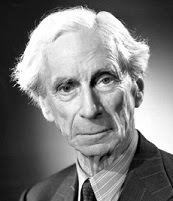
Philosophy, as I shall understand the word, is something intermediate between theology and science. Like theology, it consists of speculations on matters as to which definite knowledge has, so far, been unascertainable; but like science, it appeals to human reason rather than to authority, whether that of tradition or that of revelation. All definite knowledge – so I should contend – belongs to science; all dogma as to what surpasses definite knowledge belongs to theology. But between theology and science there is a No Man’s Land, exposed to attack from both sides; and this No Man’s Land is philosophy. Almost all the questions of most interest to speculative minds are such as science cannot answer, and the confident answers of theologians no longer seem so convincing as they did in former centuries. (p. xiii)
Saturday, August 8, 2020
The links you’ve been longing for

3:16 interviews Thomist
philosopher Gaven Kerr.
At Notre Dame Philosophical Reviews, Kerr
reviews Timothy Pawl’s book In
Defense of Extended Conciliar Christology.
Honest
criticism or cancel culture? At Persuasion, Jonathan Rauch on six
signs that you’re dealing with the latter.
At The New York Times, Ross
Douthat offers ten
theses about cancel culture.
If aliens really exist, where the hell are they? Michael Flynn surveys 34 possible answers.
Thursday, August 6, 2020
Popes, creeds, councils, and catechisms contra universalism

Sunday, August 2, 2020
A statement from David Bentley Hart

Friday, July 31, 2020
Scripture and the Fathers contra universalism

Friday, July 24, 2020
No urgency without hell

Wednesday, July 22, 2020
Hart, hell, and heresy

Well, yikes,
as the kids say. Hell hath no fury like
David Bentley Hart with his pride hurt. At Eclectic Orthodoxy, he
creates quite the rhetorical spectacle replying to my
review of his book That
All Shall Be Saved. In
response, I’ll say only a little about the invective and focus mainly on the
substance. Since there’s almost none
there, that will save lots of time. And
since Catholic Herald gave me only
1200 words to address the enormous pile of sophistries that is his book, I
would in any case like to take this opportunity to expand on some of the points
I could make in only a cursory way in the review.
Monday, July 20, 2020
The experts have no one to blame but themselves

The Week’s Damon Linker frets about
the state of the “American character,” citing an emergency physician’s wife he
knows whose friends ignore her frantic pleas on Facebook to take COVID-19 more seriously. The
Hill reports
that the “experts” are exasperated that people aren’t responding to their
warnings about the virus with sufficient urgency.
Well, of
course they aren’t, because so many experts, journalists, and politicians have,
on this subject, proven themselves to be completely full of it.
Computer campus

As you know,
academic life has largely gone online this year. My own classes at Pasadena City College this
fall will be entirely online.
The
Thomistic Institute has also adapted to the circumstances with its series of
online Quarantine
Lectures. I will be giving one of
them this Thursday, July 23, on the topic “The Metaphysics of the Will.” Details
here.
Friday, July 17, 2020
Plato predicted woke tyranny

What we are
seeing around us today may well turn out to be a transition from decadent
democratic egalitarianism to tyranny, as Plato described the process in The Republic. I spell it out in a
new essay at The American Mind.
Monday, July 13, 2020
Review of Hart

My
review of David Bentley Hart’s That
All Shall Be Saved: Heaven, Hell, and Universal Salvation appears in the
latest issue of Catholic Herald. You can read it online here. (It’s behind a paywall, but when you click on
the link you will see instructions telling you how to register for free
access.)
Here are
some earlier posts that explore in greater detail some of the issues raised in
the review:
Wednesday, July 8, 2020
Other minds and modern philosophy

The “problem
of other minds” goes like this. I have
direct access to my own thoughts and experiences, but not to yours. I can perceive only your body and behavior. So how do I know you really have any thoughts and experiences? Maybe you merely behave as if you had them, but in reality you are a “zombie” in the
philosophy of mind sense, devoid of conscious awareness. And maybe this is true of everyone other than
me. How do I know that any minds at all exist other than my
own?
Saturday, July 4, 2020
The virtue of patriotism

Patriotism
involves a special love for and reverence toward one’s own country. These days it is often dismissed as
sentimental, unsophisticated, or even bigoted.
In fact it is a moral virtue and its absence is a vice. Aquinas explains the basic reason:
A man becomes a debtor to others in
diverse ways in accord with the diverse types of their excellence and the
diverse benefits that he receives from them. In both these regards, God occupies the
highest place, since He is the most excellent of all and the first principle of
both our being and our governance. But
in second place, the principles of our being and governance are our parents and
our country, by whom and in which we are born and governed. And so, after God, a man is especially
indebted to his parents and to his country.
Hence, just as [the virtue of] religion involves venerating God, so, at
the second level, [the virtue of] piety involves venerating one’s parents and
country. Now the veneration of one’s
parents includes venerating all of one’s blood relatives... On the other hand,
the veneration of one’s country includes the veneration of one’s fellow
citizens and of all the friends of one’s country.
(Summa Theologiae II-II.101.1,
Freddoso
translation)
Tuesday, June 30, 2020
The popes against the revolution

The Church
has consistently condemned doctrinaire laissez-faire
forms of capitalism and insisted on just wages, moderate state intervention in
the economy, and the grave duty of the rich to assist the poor. Everyone knows these things because they are
frequently talked about, and rightly so.
But the Church has also consistently and vigorously opposed socialism in
all its forms and all left-wing revolutionary movements, for reasons grounded
in natural law and Christian moral theology.
This is less frequently talked about, but especially important today,
when much of what is being done or called for in the name of justice is in fact
gravely immoral.
Thursday, June 25, 2020
ACPQ symposium on Aristotle’s Revenge

The American
Catholic Philosophical Association meeting in Minneapolis last November hosted
an Author Meets Critics session on my book Aristotle’s
Revenge: The Metaphysical Foundations of Physical and Biological Science. The proceedings have now been published in the
Summer 2020 issue of the American
Catholic Philosophical Quarterly. In
the first
essay I provide a précis of the book.
In the second
essay, philosopher Robert Koons addresses what I say in the book about the
A-theory and B-theory of time, and argues that the latter is easier to
reconcile with an Aristotelian philosophy of nature than I suggest. In the third
essay, physicist Stephen Barr puts forward some criticisms of my views
about method, space, and substantial form.
In the final
essay, I respond to Koons and Barr.
Monday, June 22, 2020
Envy cancels justice

Envy is
often mistaken for anger at injustice, because both can issue in hatred. But the hatred that issues from a desire for justice
is righteous, whereas the hatred that issues from envy is wicked. How can we know the difference? One telltale sign is the object of one’s hatred. Is
it what a person does? Or the person himself? Aquinas writes:
It is lawful to hate the sin in one's
brother, and whatever pertains to the defect of Divine justice, but we cannot hate
our brother's nature and grace without sin.
Now it is part of our love for our brother that we hate the fault and
the lack of good in him, since desire for another’s good is equivalent to
hatred of his evil. Consequently the
hatred of one's brother, if we consider it simply, is always sinful.
(Summa theologiae II-II.34.3)
Wednesday, June 17, 2020
Apt pupil

Justice Neil
Gorsuch was a student of John Finnis, foremost proponent of the “New Natural
Law Theory” (NNLT). Is that relevant to
understanding the Bostock decision? It might seem not, given that NNLT thinkers
like Robbie George (here
and here)
and Ryan
Anderson have strongly criticized Gorsuch’s reasoning.
Saturday, June 13, 2020
Locke’s “transubstantiation” of the self

Locke’s
agnosticism about substance led him to treat the self as essentially a bundle
of attributes. Given his empiricism, he
takes it that the most we can say of a substance – whether material or
immaterial – is that it is a “something, I know not what” that underlies
attributes. And that is too thin a conception
to lend confidence to the thesis that the self qua substance can survive death
and be rewarded or punished in the afterlife.
What to do? Locke’s solution was
to ignore substance as beside the point.
What matters for Locke is that one’s consciousness,
and in particular one’s memories, can carry over after the death of the body,
whether or not there is a soul for them to inhere in.
Friday, June 12, 2020
Great minds on wokeness

Or you could
just watch a few minutes of John Cleese,
Seinfeld, South Park, and Family Guy. (But do it soon, before it’s all removed.)
Wednesday, June 10, 2020
Theology and the analytic a posteriori

Philosophers
traditionally distinguish between analytic
and synthetic propositions. An analytic proposition is one that is true
or false by virtue of the relations between its constituent concepts. A stock example is “All bachelors are
unmarried,” which is true because the concept of being unmarried is included in
the concept of being a bachelor. A
synthetic proposition is true by virtue of something beyond the relations
between its constituent concepts. For
example, the proposition “Some bachelors are lonely” is true by virtue of a
contingent empirical relation between being a bachelor and being lonely, rather
than a necessary conceptual relation between them.
Saturday, June 6, 2020
Pod people

With woke fanatics
suddenly overrunning The New York
Times, the public health
profession, peaceful
protests, and even the
knitting community (!), life in these United States is starting to look a
little like the 1978 sci-fi classic Invasion
of the Body Snatchers. If you’re
looking for something timely to watch this evening, I recommend it. (It’s a great flick anyway.)
The metaphor
is near perfect. People are transformed
into robotic pod people only after first falling asleep and (get this) waking up. One moment they’re polite fellow citizens,
the next they are all gaping maws, shrieking at you so as to summon the rest of
the mob over for reeducation or a beat down.
After their transformation, even longtime friends and loved ones
suddenly turn on you. And in a nice
touch, much of the focus of the movie is on the pod people’s commandeering of…
the local health department.
If you want
to turn it into film festival, next rent The Last Emperor
and check out its chilling portrayal of the Maoist Red Guard. (Some of our wokesters have apparently seen
it, and thought it a “How to” video.)
And then, to
see where this mentality leads if unchecked, The
Killing Fields.
Wednesday, June 3, 2020
What “the science” is saying this week (Updated)

Andrew
Sullivan calls
our attention to epidemiologist Tara C. Smith, who moves with that curious herd
of “experts” suddenly not terribly concerned about social distancing when the
protesters filling the streets are left-wing rather than right-wing. Writes Sullivan: “The message to normies:
going outside is killing grandma. The message to woke kids: never mind!”
So which is
it? Were people like Smith lying before about
the danger of spreading the virus, in order to promote a political agenda? Or being honest about it but now willing to endanger
countless lives, in order to promote a political agenda?
Friday, May 29, 2020
Metaphysical taxidermy

I’ve often
emphasized that the reason consciousness poses such a persistent problem for
materialism has less to do with consciousness itself than it has to do with the
desiccated conception of matter that we’ve inherited from early modern
philosophy and science. Barry Dainton
makes the same point a couple of times in his book Self. For example, he writes:
Friday, May 22, 2020
The lockdown is no longer morally justifiable

As
I have said before, I think that the lockdown that was put in place in the United States
two months ago was morally justifiable given the circumstances at the
time. In my opinion, under current
circumstances, it is no longer morally justifiable. To be sure, I am not denying that some social distancing measures are still justifiable and even necessary. I am also not denying that a more modest
lockdown may still be defensible in some localities. But the draconian total lockdown that was put in place across most of the country is
at this point no longer defensible, and state and local authorities who are
relaxing it are right to do so.
Thursday, May 21, 2020
Oderberg on the hierarchy of being

In February,
David Oderberg gave a lecture in Oxford on the theme “Recovering
the Hierarchy of Being.” You can now watch it on
YouTube. Be sure also to check out David’s new book The
Metaphysics of Good and Evil (about which you can find information at
the publisher’s website).
Friday, May 15, 2020
The lockdown and appeals to authority

Here are two
things every serious student of logical fallacies understands. First, if what is at issue is the soundness of an argument, then the
motives and expertise of the person giving the argument are completely irrelevant. To fail to see this is to commit an ad hominem fallacy of “poisoning the
well.” Second, if what is at issue is
the credibility of expert testimony, then
the motives and expertise of the
person giving the testimony are highly
relevant. To fail to see this is to
commit a fallacy of “appeal to authority.”
Friday, May 8, 2020
Presentism and analogical language

Terms are
used univocally when they are used in
the same sense, as the word “bat” is in both “The baseball player swung the bat”
and “The cricket player swung the bat.”
Terms are used equivocally
when why are used in completely unrelated senses, as the term “bat” is in “The
baseball player swung the bat” and “A bat flew in through Bruce Wayne’s
window.” The analogical use of terms is a middle ground kind of usage. I gave an example when discussing Aristotelian
realism in my recent First Things review of William
Lane Craig’s book God Over All:
Friday, May 1, 2020
Joe Biden Superstar

For
something lighter as you go into the weekend, have a listen to songstress
Hannah Hoffman’s “You
Know the Thing,” a setting to music of Joe Biden’s deep thoughts on the
foundations of human rights. This promises
to become something of a new genre, given that we’ve already had The Gregory
Brothers’ now-classic Biden-penned hit “Hairy Legs.” Certainly you can take it to the bank that
Biden will keep providing us with interesting lyrics.
While you’re
at it, you should check out also the jazzy Ms. Hoffman’s philosophical tunes “Euthyphro,” “Fallacy
Funk,” and “The
Trolley Problem.”
Thursday, April 30, 2020
The burden of proof is on those who impose burdens (Updated)

I have argued
both that the
lockdown was a justifiable initial reaction to the Covid-19 crisis,
and that skeptics
ought nevertheless to be listened to, and listened to more earnestly
the longer the lockdown goes on. Here’s
one front line doctor who argues that it has gone on long enough and
should be eased up. Is he right? Maybe, though I don’t have the expertise to
answer with certainty, and I’m not addressing that question here anyway. What I am sure of is this much: The burden of
proof is not in the first place on him and people of like mind to show that the
lockdown should be ended. The burden is
on defenders of the lockdown to show
that it shouldn’t be.
Thursday, April 23, 2020
Links for the lockdown

Thomas
Osborne’s new book Aquinas’s Ethics,
part of the Cambridge Elements series, is
available online for free for a month.
How should a
Thomist deal with a pandemic? Robert Koons
proposes some
general principles, at Public
Discourse.
At Notre Dame Philosophical Reviews, Thomas
Nagel reviews
Richard Swinburne’s Are We Bodies or
Souls?
Sunday, April 19, 2020
Kremer on classical theism

At YouTube, philosopher
Elmar Kremer provides a useful multi-part introduction to the dispute between
classical theism and theistic personalism, as part of the Wireless Philosophy video
series. Here are links to each of the installments:
Thursday, April 16, 2020
The lockdown’s loyal opposition

At First Things, Fr. Thomas Joseph White has
defended the Covid-19 lockdown, whereas Rusty Reno has
criticized it. As I
said last week, I agree with Fr. Thomas Joseph but I also believe
that reason, charity, and the common good require serious engagement with
skeptics like Rusty – and that this is more
true, rather than less, the longer the lockdown goes on. Meanwhile, at The Bulwark, conservative lockdown defender Jonathan V. Last tells
us that he won’t link even to Fr. Thomas Joseph’s article, let alone
Rusty’s. The reason is that Fr. Thomas
Joseph’s article “made matters worse, not better” by granting “legitimacy” to
the idea that “there are really two sides to the issue, and that reasonable and
intelligent people can disagree.” He
compares Rusty’s skepticism to that of flat-earthers and anti-vaxxers.
Subscribe to:
Posts (Atom)