
Kenny
famously left the priesthood and the Church in the 1960s, and became a longtime
defender of agnosticism, often critical of dogmatic atheism no less than of
theism. He was not a hostile critic of
the faith, however, and retained an interest in the Catholic intellectual
tradition and in philosophical issues connected to religion. His memoir A Path from Rome remains an
engaging account of his days as a seminarian, priest, and young academic, and
of the transformation of his views during that time.
I have long
thought that Kenny’s criticisms of arguments for the existence of God and the
immortality of the soul were the weakest aspects of his work. This is not just because I happen to disagree
with his conclusions. It is because, in
my view, on these particular topics he simply happened not to consider the strongest
possible readings of the arguments he engaged with (for example, in his book on
the Five Ways). All the same, even what
he says about these matters is interesting and worth engaging with, and he never
resorted to cheap shots or glib dismissals.
I knew Kenny
only through email and regret that I never had a chance to meet him in
person. One of the most gratifying experiences
of my early academic career was reading the very kind review of my book The Last Superstition that he wrote for
the Times Literary Supplement. I first learned of the review from a reader
who had heard about it but hadn’t seen it himself. I scrambled that day to get hold of it, not
without trepidation. The book is a
confident defense of theism, and Kenny was a firm agnostic; it makes very bold
claims about the history of philosophy, and Kenny was an eminent historian of
the subject; it is vituperative toward the New Atheists, whereas Kenny’s style
was genteel. Might he not hate the book? Quite the opposite, as it turned out. (The review is not available online, but you
can read excerpts from it here.)
The Metaphysics of Mind and What is Faith? may have been the first works of Kenny’s that I came across. For any readers interested in getting an idea of the character of his work, they remain good entry points and, like Kenny’s writings in general, well worth reading. Requiescat in pace.

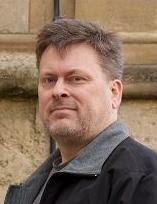
A 2018 interview with Sir Anthony Kenny.
ReplyDeletehttps://www.churchtimes.co.uk/articles/2018/14-december/features/interviews/interview-anthony-kenny-philosopher
From the interview:
"I pray for enlightenment about the existence of God."
"I’d choose to be locked in a church with David Hume. I don’t think he’s absolutely one of the top-rank philosophers, but he was one of the nicest people: an agnostic like myself, not an outright atheist, and he set an example of how an agnostic should meet death with dignity."
A 1987 Youtube interview with Kenny and Bryan Magee
ReplyDeletehttps://www.youtube.com/watch?v=dpublMuRUAk
I heard some philosophers complain that his work misrepresents the thought of continental philosophers like Hegel. Can you tell us if this is true, Professor Feser ?
ReplyDeleteOh, oh. I did not know that Anthony Kenny died on August 3. He was 95. Thank you for this post, Professor Feser.
ReplyDeleteSome commentators thought that Kenny's book, Aquinas on Mind, was good, but that his Aquinas on Being was not. I thought that the latter was very good. But I guess people's "takes" on that book will be determined by their "takes" on "Being."
I can't go back to find the passage now, but my foggy memory thinks it remembers Kenny's saying that the doctrine of analogical predication of names of God leads to agnosticism.
I found it very helpful to read your book on Aquinas as a counterpoint to his book on the Five Ways.
ReplyDeleteMay the Lord bless him and have mercy on his soul.
I had missed that he had died at 95. I appreciated his generous spirit. I followed Arthur Prior, and appreciated Kenny's very generous comments on Prior and other matters. I liked his respect for the analytic tradition - and how such an appreciation of Aquinas pushed Aquinas studies forward.
ReplyDeleteRest In Peace Sir Anthony Kelly
ReplyDeleteTo those who frequently visit his blog , his name and quote appears at the top,
"Feser... has the rare and enviable gift of making philosophical argument compulsively readable" Sir Anthony Kenny, Times Literary Supplement
It has become a staple part of my day to notice it ever since I started visiting the the blog.
Kenny*
DeleteTypo
It's 3am and I can't sleep, so I am reading about Sir Anthony Kenny. One of giants of British philosophy. He knew Russell and Ayer. We won't see his like again.
ReplyDeleteVade in Pace, Kenny.
ReplyDeleteI hope God changed Kenny’s mind in his final moments of this hard life of ours. I also hope he was not so foolish as to reject God at the most decisive moment of his life in favor of a silly and blinding skepticism.
Well he continued to pray by his own admission. He said that the only rational response to doubt and ignorance is to pray to God. I think that's correct and only Christ can judge his intentions and motives (Romans 2:16).
Delete"He said that the only rational response to doubt and ignorance is to pray to God."
DeleteI didn’t know he had said that. And, in fact, those are wise words to live by.
God bless you, Anon.
There were times when Kenny's bracing argument against confident atheism was the strong medicine I needed to keep me from going down that path. God was still using him, even as a self-proclaimed agnostic. I think confidence that God finished the work he began in Kenny's life is more than warranted.
ReplyDeleteThanks to the two anonymi for posting the interviews with Kenny. They were both interesting.
ReplyDeleteIn the youtube interview, I liked how Kenny pointed out that Bertrand Russell criticized Aquinas for trying to reconcile Aristotle with Christianity and yet pointed out that in Russell and Whitehead's Principia Mathematica, Russell spent hundreds of pages trying to prove that 2 + 2 = 4, rather than doubting it.
Of course, it might be pointed out that those are not quite the same things (and Kenny does say that), but the point is that if one thinks there are good reasons for believing something two things to be true, there is nothing wrong with trying to reconcile them. And this is true as a general point, whatever one's views about any particular philosophy or religion.
Interesting to read about Anscombe and Kenny.
ReplyDeleteHave his book on the history of philosophy in my shelf for a while. Will read it next ! Thanks for an amazing article
ReplyDeleteRest in peace Tony
ReplyDeleteI recall Christopher Hitchens mentioning somewhere having been tutored in Descartes under Kenny. And I recall Kenny mentioning, in his book “ Brief Encounters” that he tutored Boris Johnson in Aristotle. It was apparent that Kenny did not care for Johnson.
ReplyDelete