Showing posts sorted by date for query scientism. Sort by relevance Show all posts

Saturday, February 7, 2026

No, AI does not have human-level intelligence

In an article at Nature, Eddy Keming Chen, Mikhail Belkin, Leon Bergen, and David Danks ask “Does AI already have human-level intelligence?” and claim that “the evidence is clear” that the answer is Yes.  (Though the article is partially pay-walled, a read-only PDF is available here.)  But as is typical with bold claims about AI, their arguments are underwhelming, riddled with begged questions and other fallacies.

Defining “intelligence”

Naturally, before we can establish that AI has genuine intelligence, we need to make clear what it would be for it to have intelligence, and how we could go about determining that it has it.  The first is a metaphysical question, the second an epistemological question.  Our authors make no serious attempt to answer either one.

Tuesday, October 24, 2023

Cartwright on reductionism in science

In her superb recent book A Philosopher Looks at Science, Nancy Cartwright revisits some of the longstanding themes of her work in the philosophy of science.  In an earlier post, I discussed what she has to say in the first chapter about theory and experiment.  Let’s look now at what she says in her second chapter about reductionism, of which she has long been critical. 

Reductionism does not have quite the same hold in philosophy of science that it once did, having been subjected to powerful attack not only from Cartwright, but from Paul Feyerabend, John Dupré, and many others.  (I discuss the anti-reductionist literature in detail in Aristotle’s Revenge.)  Still, the idea that whatever is real is somehow ultimately nothing more than what can in principle be described in the language of a completed physics exerts a powerful hold on many.  Cartwright cites James Ladyman and Don Ross as adherents of this view, and Alex Rosenberg is another prominent advocate.  As Cartwright notes, in contemporary writing about science, the lure of reductionism is especially evident in discussions of the purported implications of neuroscience for topics like free will.

Sunday, September 10, 2023

Hartshorne on the project of natural theology

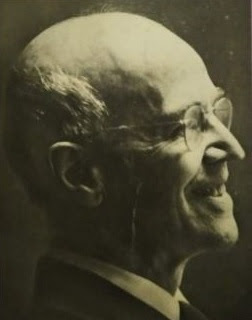
Process theism denies some of the key attributes ascribed to God by classical theism, such as immutability and impassibility.  Charles Hartshorne (1897-2000) was among its chief representatives.  As a Thomist, I am the opposite of sympathetic to process theism.  However, I’ve always found Hartshorne an interesting thinker.  Many twentieth-century philosophers had a regrettable tendency toward overspecialization, and also often ignored all but a handful of thinkers of the past.  Hartshorne, by contrast, was a philosopher of the old-fashioned stripe.  He addressed a wide variety of philosophical problems, was deeply read in the history of philosophy, and that history informed his work on contemporary issues.  He was also old-fashioned insofar as his theism (flawed though it was from my point of view) was integral to his more general metaphysics and ethics.  Like the greatest thinkers of the past, Hartshorne knew that the question of God was at the very heart of philosophy, not something that could be ignored by any serious philosopher, or at best tacked on to an otherwise complete system.

Saturday, March 25, 2023

Putnam on reason, reductionism, and relativism

Naturalism holds that what is real is what can be accounted for in terms acceptable to science.  More or less the orthodoxy in contemporary intellectual life, naturalism is a purportedly less crude descendent of what was traditionally known as materialism.  For the materialist, matter alone is real, so that anything that is both real and seems to be different from matter (mind, for example) must somehow really be material after all.  In modern times, matter is often conceived of on the model of particles in motion, so that “materialism” connotes the idea that everything real is really nothing but particles in motion. 

Friday, March 3, 2023

Naturalism versus Katz’s Platonism

Naturalism holds that there is nothing more to reality than the world of concrete entities causally related to one another within space and time.  Since this is the realm studied by the natural sciences (such as physics, chemistry, and biology), naturalism can also be characterized as the view that the subject matter of natural science is all that there is.  Naturalism thus denies the existence of God, of angelic intellects, of immaterial souls (whether conceived of along the lines of Descartes’ res cogitans or in some other way), and of Platonic Forms and other abstract objects. 

Friday, January 20, 2023

Cartwright on theory and experiment in science

Nancy Cartwright’s A Philosopher Looks at Science is a new treatment of some of the longstanding themes of her work.  It is written in her characteristically agreeable style and full of insights.  The book is devoted to criticizing three widespread but erroneous assumptions about science: that science is essentially just theory plus experiment; that in some sense everything science tells us is reducible to physics; and that science reveals that everything that happens, including human action, is determined by the laws of physics.  In this post I’ll discuss what she says about the first of these claims, which is the subject of the first and longest chapter in the book.  I may devote a later post to the other claims.

Thursday, December 8, 2022

Is God’s existence a “hypothesis”?

Over at Twitter I’ve caused some annoyance by objecting to the phrase “the God hypothesis.”  The context was a discussion of Stephen Meyer’s book Return of the God Hypothesis: Three Scientific Discoveries That Reveal the Mind Behind the Universe.  My view is that to present theism as a “hypothesis” that might be confirmed by scientific findings is at best irrelevant to actually establishing God’s existence and at worst harmful insofar as it insinuates serious misunderstandings of the nature of God and his relationship to the world.  Since Twitter is not a medium conducive to detailed and nuanced exposition, here is a post explaining at greater length what I mean.

Thursday, November 10, 2022

Adventures in the Old Atheism, Part VII: The influence of Kant


Immanuel Kant was, of course, not an atheist.  So why devote an entry to him in this series, thereby lumping him in with the likes of Nietzsche, Sartre, Freud, Marx, Woody Allen, and Schopenhauer?  In part because Kant’s philosophy, I would suggest, inadvertently did more to bolster atheism than any other modern system, Hume’s included.  He was, as Nietzsche put it, a “catastrophic spider” (albeit not for the reasons Nietzsche supposed).  But also in part because, like the other thinkers in this series, Kant had a more subtle and interesting attitude about religion than contemporary critics of traditional theology like the New Atheists do.

Monday, March 14, 2022

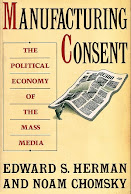
Chomsky’s “propaganda model” of mass media

A common mistake people make when evaluating a theory is to fail to keep in mind the distinction between the theory itself, its application to particular cases, and the auxiliary assumptions an advocate of the theory makes when developing that application.  People will often reject a theory because they find some particular application problematic, where if they thought about the matter more carefully they would see that the problem is only with that application and/or with the auxiliary assumptions, and not with the theory itself. 

Wednesday, February 9, 2022

McDowell’s Aristotelian near miss

John McDowell’s paper “Singular Thought and the Extent of Inner Space” made a big impression on me in graduate school, around the same time his influential book Mind and World was published.  Like a lot of philosophers, I thought there was something deep going on in McDowell’s work, though (also like a lot of philosophers, I think) I was not quite sure what to make of it.  Part of this has to do with the difficulty of McDowell’s style, but that difficulty reflects, at least in part, the difficulty of the subject matter.  The nature of thought and of experience is so close to us – like the tip of one’s nose, always in one’s field of vision, and thus rarely noticed – that it can be, precisely for that reason, harder to get hold of than the extra-mental world is. 

Friday, October 29, 2021

Adventures in the Old Atheism, Part VI: Schopenhauer


Our series has examined how atheists of earlier generations often exhibited a higher degree of moral and/or metaphysical gravitas than the sophomoric New Atheists of more recent vintage.  As we’ve seen, this is true of Nietzsche, Sartre, Freud, Marx, and even Woody Allen.  There is arguably even more in the way of metaphysical and moral gravitas to be found in our next subject, Arthur Schopenhauer.  Plus, I think it has to be said, the best hair.  So let’s have a look, if you’re willing.

Saturday, September 11, 2021

Ioannidis on the politicization of science


Like other academics, I first became aware of John Ioannidis through his influential 2005 paper “Why Most Published Research Findings are False.”  That essay was widely praised as a salutary reminder from one scientist to his fellows of the need for their field to be self-critical.  With the COVID-19 pandemic, Ioannidis would become far more widely known, this time for expressing skepticism about some of the scientific claims being made about the virus and the measures taken to deal with it.  His warnings were in the same spirit as that of his earlier work, and presented in the same measured and reasonable manner – but this time they were not so warmly received.  In a new essay at The Tablet, Ioannidis reflects on the damage that has been done to the norms of scientific research as politics has corrupted it during the pandemic.

Saturday, June 26, 2021

A whole lotta links

At Substack, philosopher Michael Robillard explains how he left academia, and how academia left him.

Anna Krylov warns of the growing politicization of science, in the Journal of Physical Chemistry.  Nautilus on the sometimes contradictory scientific literature. 

At Rolling Stone, hear David Crosby sing Donald Fagen’s new song “Rodriguez for a Night.”

The Spectator on a new biography of Kurt Gödel. 

At the Claremont Review of Books, Joseph M. Bessette on Barack Obama’s latest memoir.

Monday, May 3, 2021

The idols of the mind

Thomas Harper is one of the great forgotten Neo-Scholastic writers of the nineteenth century.  I discussed his wonderful little book The Immaculate Conception in a blog post many years ago.  He is especially notable for his unusually rigorous and thorough treatment of abstract topics in metaphysics, in works such as the massive three-volume The Metaphysics of the School.  Harper will sometimes interrupt a sustained exercise in abstract reasoning with a non-technical aside, as he does in the course of discussing the metaphysics of truth in Volume I.  He there offers (at pp. 461-466) a commentary on Francis Bacon’s “idols of the mind” which is even more relevant now than it was in Harper’s day.

Saturday, March 20, 2021

Meta-abstraction in the physical and social sciences

One of the themes of Aristotle’s Revenge is the centrality of mathematical abstraction to modern scientific method, and the ways that it both affords modern physics tremendous predictive power but also, if we are not careful, is prone to generate philosophical fallacies and metaphysical illusions.  This is especially so where we are dealing with abstractions from abstractions – meta-abstractions, if you will. 

In his recent book on the philosophy of time, Raymond Tallis notes how this has happened in modern thinking about the nature of space and time.  First, physical space has come to be conflated with geometry.  Whereas the notions of a point, a line, a plane and the like were originally merely simplifying abstractions from concrete physical reality, the modern tendency has been to treat them as if they were the constituents of concrete physical reality.  But then a second stage of abstraction occurs when geometrical concepts are in turn conflated with values in a coordinate system.  Points are defined in terms of numbers, relations between points in terms of numerical intervals, length, width and depth in terms of axes originated from a point, and so on.  Time gets folded into the system by representing it with a further axis.  Creative mathematical manipulations of this doubly abstract system of representation are then taken to reveal surprising truths about the nature of the concrete space and time we actually live in.

Saturday, February 6, 2021

What is religion?

The question is notoriously controversial.  Consider a definition like the following, from Bernard Wuellner’s Dictionary of Scholastic Philosophy:

religion, n. 1. the sum of truths and duties binding man to God. 2. personal belief and worship in relation to God.  Religion includes creed, cult, and code.

By “creed,” what Wuellner has in mind is a system of doctrine.  A “cult,” in this context, has to do with a system of rituals of the kind associated with worship and the like.  The “code” referred to has to do with a system of moral principles.  So, the definition is telling us that doctrines, rituals, and moral principles are among the key elements of religion.

Friday, January 8, 2021

The Gnostic heresy’s political successors

The Western world is the creation of the Church, and the crisis of the West is always at bottom the crisis of the Church.  This is especially so where the Church has receded into the background of the Western mind – where men’s plans are hatched in the name of progress, science, social justice, equity, or some other purportedly secular value, and make little or no reference to religion.  For liberalism, socialism, communism, scientism, progressivism, identity politics, globalism, and all the rest – this Hydra’s head of modernist projects, however ostensibly secular, is united by two features that are irreducibly theological.

Thursday, October 22, 2020

Dupré on the ideologizing of science

Philosopher of science John Dupré, like Nancy Cartwright, Paul Feyerabend, and others, has developed powerful and influential criticisms of reductionism.  Whereas Cartwright is best known for her criticisms of reductionism in the context of physics, Dupré has tended to focus instead on biology (though both have addressed the other sciences as well).  Like Cartwright, his style is less mischievous and polemical than Feyerabend’s was.  Dupré’s essay “The Miracle of Monism” is a useful overview of his approach, and contains lessons especially relevant at a time when science (or at least the use to which it is put in public policy) has become ideologized.

Thursday, October 15, 2020

Lockdowns versus social justice

The phrase “social justice” has a long and honorable history in Catholic social thought going back to the nineteenth century, but is now typically deployed in defense of policies that are diametrically opposed to social justice as the Church and its thinkers have always understood it.  And unfortunately, this is true even in the case of many Catholics, who lazily adopt various leftist attitudes and policies simply because they are falsely but relentlessly presented as concomitants of “social justice.” 

Last April, Fr. John Naugle argued in an important article at Rorate Caeli that indefinite lockdowns violate the natural human right to labor in order to provide for oneself and one’s family, and thus are deeply contrary to social justice.  He revisits the issue in a follow-up article.  Some Catholic defenders of the lockdowns are people who, in other contexts, claim to stand up for the rights of workers and to oppose consequentialist thinking.  But as Fr. Naugle points out, their rationalizations for the lockdowns are precisely consequentialist in character – pitting the alleged benefits of lockdowns against inviolable natural rights – and harm workers far more than any other segment of society.

Saturday, September 12, 2020

The rule of lawlessness

As Aristotle and Aquinas teach us, human beings are by nature rational social animals.  Because we are a kind of animal, we need to be safe from violent attack and we need the freedom to acquire food, shelter, clothing and other material goods and to be able to rely on stable possession of them.  Because we are social animals, we need the cooperation of others in order to acquire these material goods, and we also need the warmth of human relationships and a sense of belonging and loyalty to a larger whole – to a family, a community, a nation.  Because we are rational animals, we need for others to appeal to our reason in order to persuade us of their opinions and favored policies, rather than resorting to intimidation and violence.