Showing posts sorted by relevance for query scientism. Sort by date Show all posts

Friday, July 20, 2018

Fallacies physicists fall for


In his essay “Quantum Mechanics and Ontology” in his anthology Philosophy in an Age of Science, Hilary Putnam notes that “mathematically presented quantum-mechanical theories do not wear their ontologies on their sleeve… the mathematics does not transparently tell us what the theory is about.  Not always, anyhow” (p. 161).  Yet as Putnam also observes:

The reaction to [such] remarks of most physicists would, I fear, be somewhat as follows: “Why bother imposing an ‘ontology’ on quantum mechanics at all?... [Q]uantum mechanics has a precise mathematical language of its own.  If there are problems with that language, they are problems for mathematical physicists, not for philosophers.  And in any case, we know how to use that language to make predictions accurate to a great many decimal places.  If that language does not come with a criterion of ‘ontological commitment,’ so much the worse for ‘ontology.’”…

Thursday, November 3, 2011

Reading Rosenberg, Part II

We saw in part I of this series that Alex Rosenberg’s new book The Atheist’s Guide to Reality is less about atheism than it is about scientism, the view that science alone gives us knowledge of reality.  This is so in two respects.  First, Rosenberg’s atheism is just one implication among others of his scientism, and the aim of the book is to spell out what else follows from scientism, rather than to say much in defense of atheism.  Second, that it follows from his scientism is thus the only argument Rosenberg really gives for atheism.  Thus, most of what he has to say ultimately rests on his scientism.  If he has no good arguments for scientism, then he has no good arguments either for atheism or for most of the other, more bizarre, conclusions he defends in the book.

So, does Rosenberg have any good arguments for scientism?  He does not.  In fact, he has only one argument for it, and it is quite awful.

Friday, March 4, 2011

Scientism roundup

In several recent posts we have dealt at least indirectly with scientism, the view that the only real knowledge is scientific knowledge.  Scientism is an illusion, a bizarre fantasy that makes of science something it can never be.  Seemingly the paradigm of rationality, it is in fact incoherent, incapable in principle of being defended in a way consistent with its own epistemological scruples.  It should go without saying that this in no way entails any criticism of science itself.  For a man to acknowledge that there are many beautiful women in the world does not entail that he doesn’t think his own wife or girlfriend is beautiful.  Similarly, to say that there are entirely rational and objective sources of knowledge other than science does not commit one to denying that science is a source of knowledge.  Those who cannot see this are doubly deluded – like a vain and paranoid wife or girlfriend who thinks all women are far less attractive than she is and regards any suggestion to the contrary as a denial of her own beauty.  Worse, like an already beautiful woman whose vanity leads her to destroy her beauty in the attempt to enhance it through plastic surgery, scientism threatens to distort and corrupt science precisely by exaggerating its significance.

Wednesday, May 2, 2012

Rosenberg roundup

Having now completed our ten-part series of posts on Alex Rosenberg’s The Atheist’s Guide to Reality, it seems a roundup of sorts is in order.  As I have said, Rosenberg’s book is worthy of attention because he sees more clearly than most other contemporary atheist writers do the true implications of the scientism on which their position is founded.  And interestingly enough, the implications he says it has are more or less the very implications I argued scientism has in my own book The Last Superstition.  The difference between us is this: Rosenberg acknowledges that the implications in question are utterly bizarre, but maintains that they must be accepted because the case for the scientism that entails them is ironclad.  I maintain that Rosenberg’s case for scientism is completely worthless, and that the implications of scientism are not merely bizarre but utterly incoherent and constitute a reductio ad absurdum of the premises that lead to them.

Friday, February 3, 2012

Reading Rosenberg, Part VII

Pressing on through Alex Rosenberg’s The Atheist’s Guide to Reality, we come to Rosenberg’s treatment of morality.  Followed out consistently, Rosenberg says, scientism entails nihilism.  As Rosenberg is keen to emphasize, this is not the same as moral relativism or moral skepticism.  It is not the claim that moral truth is relative, or that it is real but unknowable.  Nor is it the claim that everything is morally permitted.  It is a far more radical and disturbing claim than any of these views.  Nihilism, as Rosenberg understands it, is the view that there is no such thing as being “morally permitted” or “morally prohibited” in the first place.  For there is, given Rosenberg’s scientism, no intrinsic value in the world of the sort that is necessary for morality to be intelligible.  Morality -- not just commonsense or traditional morality, not just religious morality, but all morality, morality as such, including any purported secular, liberal, permissive morality -- is therefore an illusion.  

Thursday, August 13, 2020

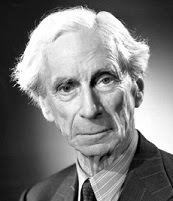
Russell’s No Man’s Land

In his History of Western Philosophy, Bertrand Russell famously characterized philosophy as follows:

Philosophy, as I shall understand the word, is something intermediate between theology and science.  Like theology, it consists of speculations on matters as to which definite knowledge has, so far, been unascertainable; but like science, it appeals to human reason rather than to authority, whether that of tradition or that of revelation.  All definite knowledge – so I should contend – belongs to science; all dogma as to what surpasses definite knowledge belongs to theology.  But between theology and science there is a No Man’s Land, exposed to attack from both sides; and this No Man’s Land is philosophy.  Almost all the questions of most interest to speculative minds are such as science cannot answer, and the confident answers of theologians no longer seem so convincing as they did in former centuries. (p. xiii)

Monday, April 30, 2012

Reading Rosenberg, Part X

And now we reach, at long last, the end of our detailed critical look at Alex Rosenberg’s The Atheist’s Guide to Reality.  In this final post I want to examine what Rosenberg has to say about a set of philosophical arguments he regards as “among the last serious challenges to scientism” (p. 228).  The arguments in question all entail that the realm of conscious experience -- what common sense says we know only “from inside” (p. 238), from a point of view “somewhere behind the eyes” (p. 222) -- cannot be accounted for in terms of neuroscience or physical science more generally.  In his treatment of these arguments, we get Rosenberg simultaneously at his best and at his worst.

Saturday, July 5, 2014

Carroll on laws and causation


People have been asking me to comment on the remarks about causation made by atheist physicist Sean Carroll during his recent debate with William Lane Craig on the topic of “God and Cosmology.”  (You’ll find Craig’s own post-debate remarks here.)  It’s only fair to acknowledge at the outset that Carroll cannot justly be accused of the anti-philosophical philistinism one finds in recent remarks by physicists Stephen Hawking, Lawrence Krauss, and Neil deGrasse Tyson.  Indeed, Carroll has recently criticized these fellow physicists pretty harshly, and made some useful remarks about the role of philosophy vis-à-vis physics in the course of doing so.

Thursday, October 27, 2011

Reading Rosenberg, Part I

I called attention in an earlier post to my review in First Things of Alex Rosenberg’s new book The Atheist’s Guide to Reality.  Here I begin a series of posts devoted to examining Rosenberg’s book in more detail than I had space for in the review.  The book is worthy of such attention because Rosenberg sees more clearly than any other prominent atheist just how extreme are the implications of the scientism on which modern atheists tend to base their position.  Indeed, it is amazing how similar his conclusions are to those I argue follow from scientism in chapters 5 and 6 of The Last Superstition.  The difference is that whereas I claim that these consequences constitute a reductio ad absurdum of the premises that lead to them, Rosenberg regards them as “pretty obvious” and “totally unavoidable” truths about an admittedly “rough reality,” which atheists should embrace despite its roughness.  How rough is it?  Writes Rosenberg:

Science -- especially physics and biology -- reveals that reality is completely different from what most people think.  It’s not just different from what credulous religious believers think.  Science reveals that reality is stranger than even many atheists recognize. (p. ix)

and

The right answers are ones that even some scientists have not been comfortable with and have sought to avoid or water down. (p. xii)

Thursday, November 10, 2011

Reading Rosenberg, Part III

Continuing our look at Alex Rosenberg’s The Atheist’s Guide to Reality, we come to Rosenberg’s treatment of the question “Where did the big bang come from?”  As serious students of the cosmological argument for the existence of God are aware, most of its defenders historically (including key figures like Aristotle, Aquinas, and Leibniz) are not arguing for a temporal first cause of the world.  Their claim is not that God must have caused the world to begin (though some of them believe that He did, for independent reasons) but rather that He must continually be sustaining the world in existence, and would have to be doing so even if the universe had no beginning.  But there is a version of the cosmological argument that does argue for a temporal first cause of the world, namely the kalām cosmological argument.  Rosenberg does not explicitly address any specific version of either argument, but he is, in effect, trying to rebut them both.

Tuesday, July 21, 2009

Beguiled by scientism

Over at his own blog, UnBeguiled (occasional commenter at this blog) criticizes the argument from motion as presented in The Last Superstition. Unfortunately, he fundamentally misunderstands it. He claims that by “motion” I mean ”acceleration”; in fact, “motion” in the context of the argument means the actualization of a potential, and applies to all kinds of change, having nothing necessarily to do with local motion in particular. He assumes that the idea of a per se or essentially ordered causal series has fundamentally to do with a simultaneity of causes and effects; in fact it has to do with the instrumental character of (all but one of) such a series’ causes, their having (apart from the first member) no independent causal power. (Examples of simultaneous causes and effects are useful for illustrating the idea, and such a series is bound to trace eventually to a first cause operating here and now; but simultaneity per se is not what is doing the philosophical work.) In general he assumes that the argument has to do with physics; in fact it has to do with metaphysics (or, more precisely from a Neo-Scholastic point of view, with philosophy of nature, but the label “metaphysics” will do given the way that term tends to be used in contemporary philosophy).

Since I make all of this clear in the book, I don’t know why he so badly misreads the argument, unless it is because (to paraphrase Wittgenstein) a picture is holding him captive. That picture is scientism, the thesis that the questions and methods of empirical science are the only real questions and methods there are. Since scientism itself is not an empirical hypothesis, not something the truth or falsity of which can be established by empirical scientific means, it is (when not so qualified as to be no longer interesting) self-undermining. Somehow that never seems to weaken its grip over those beguiled by it, despite their oft-purported superior rationality. Having once hit upon the idea – usually as a reaction against some body of religious doctrine they’ve become disillusioned with – they fall absolutely head over heels in love with it and become insensitive to criticism. Scientism just can’t be wrong, you see, because when they first became aware that there was something called “reason” as opposed to “faith,” that reason appeared to them in scientistic form, and to abandon the scientism would seem to them to be to abandon reason too. This is tosh, but tosh that is all the more powerful to the extent that those who buy into it think themselves for that reason uniquely immune to tosh. It is no wonder, then, that despite the fact that I explain all of this too in the book, UnBeguiled remains UnUnBeguiled.

Anyway, be all that as it may: What UnBeguiled’s (apparent) scientism keeps him from seeing is that Aristotelian-Thomistic arguments for God’s existence do not take as their starting points premises to which empirical science as that field of study is understood today is relevant. They begin instead from premises that any such science must take for granted. (That is not to say that “physics” in some sense of the word is not relevant to an argument from motion, since the boundaries between science and philosophy are not carved up in Aristotelian-Thomistic philosophy the way they are by other traditions in philosophy. The point is just that the sort of premises that an argument from motion starts from would, the way things tend to be carved up by most scientists and philosophers today, better be thought of as claims in metaphysics or philosophy of nature rather than physics per se.)

In the case at hand, what is relevant is the actuality/potentiality (or act/potency) distinction. As those familiar with the history of ancient philosophy (and TLS readers) know, the origin of this distinction lies in Aristotle’s response to Parmenides. Parmenides attempted to demonstrate a priori that change is impossible. Aristotle responded, in part, that we can understand how change is possible when we see that there is, in addition to being and non-being (the notions Parmenides makes use of), the third category of what exists potentially – that which is not actual and may never be actualized, but which is not nothing either. Hence it is not enough to say of a rubber ball (to make use of an example from TLS) that it is actually solid and spherical but not actually melted and not actually the number 23. For it is melted in potency or potentially, but it is not the number 23 even potentially. Once we see this, we can see why change is possible: the ball can melt because in doing so it is not going from sheer non-being to being (which Parmenides argued was incoherent) but rather from being in potency to being in actuality.

There are other reasons why we must recognize an act/potency distinction. For example (and for reasons I spell out in TLS and have alluded to in previous posts), we have to recognize in all efficient causes something like final causality or directedness toward an end if we are to make causation intelligible at all. But to recognize this is to recognize the existence of potency as distinct from act, since a cause that is directed toward the generation of some effect even when it hasn’t yet actually generated it is in potency relative to such generation. The point, though, is that this whole discussion takes place at a deeper level than empirical science. Empirical science studies particular changes and causes; metaphysics or philosophy of nature studies the preconditions of there being any changes or causes at all. Empirical science reveals to us the specific mechanisms by which the reduction of potency to act (to put it the way the Scholastics would) occurs in this or that specific domain within the natural world; metaphysics or philosophy of nature reveals to us that such a reduction must underlie whatever those mechanisms turn out to be.

For Aristotle and the tradition he inaugurated, the most important instances of reduction of potency to act involved essentially ordered series in which some causes were instrumental relative to others (and of which simultaneous causes and effects are the most obvious examples). UnBeguiled insinuates that the notion of a per se or essentially ordered causal series is something trumped up for the purposes of religious apologetics. In fact it is nothing of the kind, unless you think Aristotle and other pagans were frantically concerned to prepare the way, millennia in advance, for Josh McDowell.

The sort of example that in TLS I follow Aquinas in using, viz. a hand’s using a stick to move a stone, is (as I note in the book) just an illustration to generate the key concepts; strictly speaking, a hand isn’t a first mover. And strictly speaking, quibbles over whether the movement of the stick occurs at exactly one and the same instant of time as the movement of the stone are not to the point either. As I emphasize in the book – and this is something UnBeguiled omits to mention – ultimately the stone, stick, and hand all depend for their very existence at any moment (forget about their movements through space) on the actualization of various potentials. For the muscles to exist here and now the potentiality of their constituent cells to constitute muscles must be actualized here and now; for the cells to be actualized in that potential, the potential of the molecules making up the cells to constitute cells must itself be actualized here and now; and so forth. This does imply simultaneity, but notice that (a) the point has nothing to do with acceleration, change of spatial location, etc., and (b) the point isn’t so much that the members of the series are simultaneous (though they are) but that they are essentially ordered: no molecules, no cells, no muscles.

The length of the series is irrelevant. As other Thomists have noted, even if an essentially ordered causal series could per impossibile go back infinitely far, since none of the causes in it have any intrinsic causal power there would have to be some purely actual unmoved mover outside it which keeps it operative. And by the same token, if there were even a single actualization of a potency, that too would suffice to lead us to a purely actual unmoved mover. Look around you; or don’t look around, just contemplate your own thoughts. Is there any actualization of a potential at all? Why, yes there is – and Boom, you’ve got your unmoved mover, whether immediately or at the end of a series. (Supposing the argument from motion is free of other problems, that is – here I’m just addressing the claims UnBeguiled makes.)

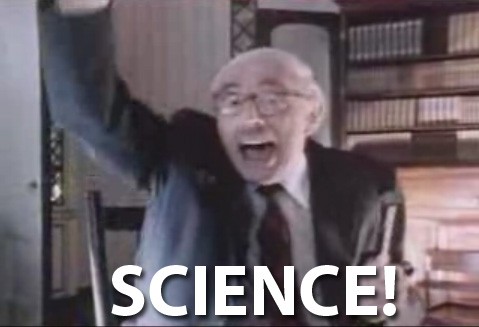
And lest UnBeguiled seek to quibble now over physiology, I should emphasize that the specific empirical details here are irrelevant as well. Whatever the details of the physics, chemistry, or physiology turn out to be, they are all going to involve the reduction of potency to act in essentially ordered causal series, because any material world at all is going to involve that. And that is all that matters for the argument. This is not “imaginary physics,” but the metaphysical precondition of there being any non-imaginary physical world at all. To refute the argument, then, it will not do simply to shout “Science!” What is needed is a serious philosophical evaluation; more Thomas Aquinas, less Thomas Dolby.

Thursday, October 22, 2020

Dupré on the ideologizing of science

Philosopher of science John Dupré, like Nancy Cartwright, Paul Feyerabend, and others, has developed powerful and influential criticisms of reductionism.  Whereas Cartwright is best known for her criticisms of reductionism in the context of physics, Dupré has tended to focus instead on biology (though both have addressed the other sciences as well).  Like Cartwright, his style is less mischievous and polemical than Feyerabend’s was.  Dupré’s essay “The Miracle of Monism” is a useful overview of his approach, and contains lessons especially relevant at a time when science (or at least the use to which it is put in public policy) has become ideologized.

Thursday, September 11, 2014

Symington on Scholastic Metaphysics


Edward Feser demonstrates a facility with both Scholastic and contemporary analytical concepts, and does much to span the divide…

The final chapter [is]… a nice example of the service that Feser renders to the task of enhancing points of commonality between scholastic and analytic thinkers.  In this chapter, Feser defends a realist form of essentialism as well as argues for a real distinction between essence and existence.  As is characteristic of the book as a whole, Feser brings in contemporary views in way that makes good use of, and is charitable to, contemporary developments in metaphysics…

In all, Feser's new book is a welcome addition for those interested in bringing the concepts, terminology and presuppositions between scholastic and contemporary analytic philosophers to commensuration. In fact, I would contend that Feser's book will constitute an important piece in its own right for guiding the research program for contemporary Thomistic metaphysicians into the future.

Monday, May 10, 2010

Hayek and scientism

My recent two-part essay on scientism for Public Discourse has just been reprinted as “Hayek and Scientism” in the Spring 2010 issue of The City. If you missed it the first time around, here’s your chance to catch up. And if you did read it before and didn’t like it, see what you think now that it’s got a new title and has been laid out all pretty, magazine-style. Or at least check out the rest of the issue.

Monday, February 3, 2014

Heavy Meta


My new book Scholastic Metaphysics: A Contemporary Introduction will be out this May.  I’ve expounded and defended various aspects of Scholastic metaphysics at some length in other places -- for example, in chapter 2 of The Last Superstition and chapter 2 of Aquinas -- but the new book pursues the issues at much greater length and in much greater depth.  Unlike those other books, it also focuses exclusively on questions of fundamental metaphysics, with little or no reference to questions in natural theology, ethics, philosophy of mind, or the like.  Call it Heavy Meta.  Even got a theme song.

To whet your appetite, here’s the cover copy and a detailed table of contents:

Monday, August 5, 2013

Eliminativism without truth, Part I


Suppose you hold that a good scientific explanation should make no reference to teleology, final causality, purpose, directedness-toward-an-end, or the like as an inherent and irreducible feature of the natural order.  And suppose you hold that what is real is only what science tells us is real.  Then you are at least implicitly committed to denying that even human purposes or ends are real, and also to denying that the intentionality of thought and the semantic content of speech and writing are real.  Scientism, in short, entails a radical eliminativism.  Alex Rosenberg and I agree on that much -- he defends this thesis in The Atheist’s Guide to Reality and I defend it in The Last Superstition.  Where we differ is over the lesson to be drawn from this thesis.  Rosenberg holds that scientism is true, so that eliminativism must be true as well.  I maintain that eliminativism is incoherent, and constitutes a reductio ad absurdum of the scientism that leads to it.  I responded to Rosenberg at length in a series of posts on his book.

In his paper “Eliminativism without Tears,” Rosenberg attempts in a more systematic way than he has elsewhere to respond to the charge of incoherence.  Rosenberg kindly sent me this paper some time ago, and I note that it is now available online.

Tuesday, August 25, 2020

Separating scientism and state

Scientism transforms science into an intolerant and all-encompassing ideology.  Bad as it is when it issues in crackpot philosophy, it can be even worse when used to rationalize destructive public policy – as with the increasingly idiotic and oppressive lockdowns that have been imposed across much of the world.  Now perhaps more than ever we need the corrective provided by the late, great philosopher of science Paul Feyerabend (1924-1994), who argued trenchantly for a separation of scientism and state.  I offer a primer in a new article at The American Mind.

Friday, March 12, 2010

Recovering Sight after Scientism

Seeing that scientism is unsustainable, we must embrace a return to philosophy. Here is the second article in a two-part series on scientism I wrote for Public Discourse.

Monday, October 17, 2011

Review of Rosenberg

My review of Alex Rosenberg’s new book The Atheist’s Guide to Reality appears in the November issue of First Things.  (Unfortunately, the review is behind a pay wall, or I’d link to it.)  If you want a sense of what the book is like, first consider all the ludicrous implications that I argue follow from scientism in chapters 5 and 6 of The Last Superstition; and then consider someone taking (at least some of) those implications, not as a reductio ad absurdum of scientism, but as a set of surprising consequences that every atheist should happily embrace.   Whatever else one could say about him, Rosenberg is more consistent than other naturalists.  For that reason the book deserves a wide readership.  Those beholden to scientism should know that they are committing themselves to a position that is absolutely bizarre, and indeed utterly incoherent. 

We have had reason to discuss Rosenberg’s ideas before (here, here, and here), when considering an essay of his that first sketched out the themes he now develops at greater length in the book.  We will have reason to consider them further, for I intend in a series of future posts to analyze the book in greater detail than I had space for in the review.  Stay tuned.

Tuesday, January 2, 2018

The best New Atheist book?


The New Atheism, one hears from time to time (e.g. here, here, here, and here), is dead.  Maybe.  It depends on what you mean by “New Atheism.”  I would say that its key marks are three: first, an unreflective and dogmatic scientism; second, an extremely shallow understanding of religion; and third, an obnoxious, evangelical fervor.  The third probably has by now worn out its welcome.  Even many secular people are tired of hearing the ever more unhinged rants and calls to action of the likes of Richard Dawkins and P. Z. Myers, and appalled by the lemming-like behavior of the kind of people who show up at a Reason Rally or Jerry Coyne’s combox.  As a self-conscious movement the New Atheism might be a spent force.